
Emergency Chimney Sweep Near Me: What Fort Wayne Homeowners Should Do First
If you smell smoke in the house with no fire burning, close the damper and look for the source before you call anyone. Three different problems produce that smell, and only one of them needs a sweep tonight. The first fifteen minutes matter more than which company you call. They decide whether the situation stays contained or gets worse while you’re scrolling for a phone number. If you’d rather have someone walk you through it, call (866) 589-6152. We answer 24/7.
Four Chimney Emergencies in Fort Wayne, Four Different First Moves
Most “emergency” chimney calls fall into one of four buckets. Each one has its own first action, and getting the wrong one can make things worse. If you’d rather not sort it out alone, call us and we’ll help you figure out which bucket you’re in.
1. Chimney fire (or a fire that just happened)
Get everyone out of the house, call 911, and stay out until the fire department clears the structure. Don’t spray water down the flue. A hot flue hit with cold water can crack, and you don’t want masonry damage on top of a fire. Once the fire department has cleared the house, that’s when you need a chimney inspection before lighting another fire. A chimney fire often burns itself out quietly and leaves crease and cracked tile behind. Our technicians have up to experience reading fire damage, and a chimney inspection is the only honest way to know what’s left.
2. Animal intrusion
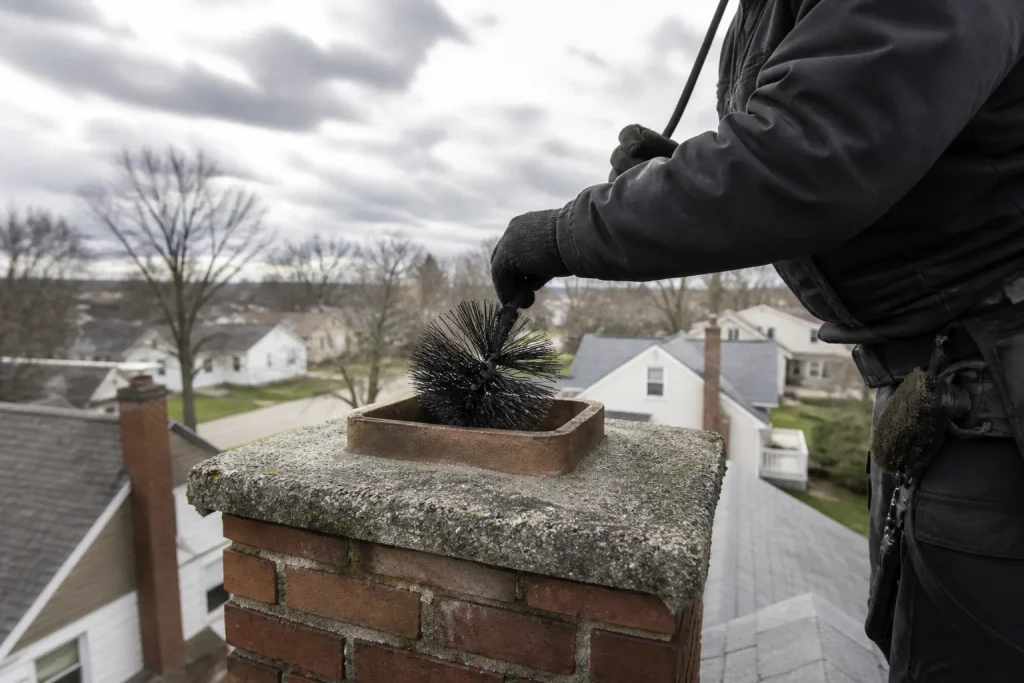
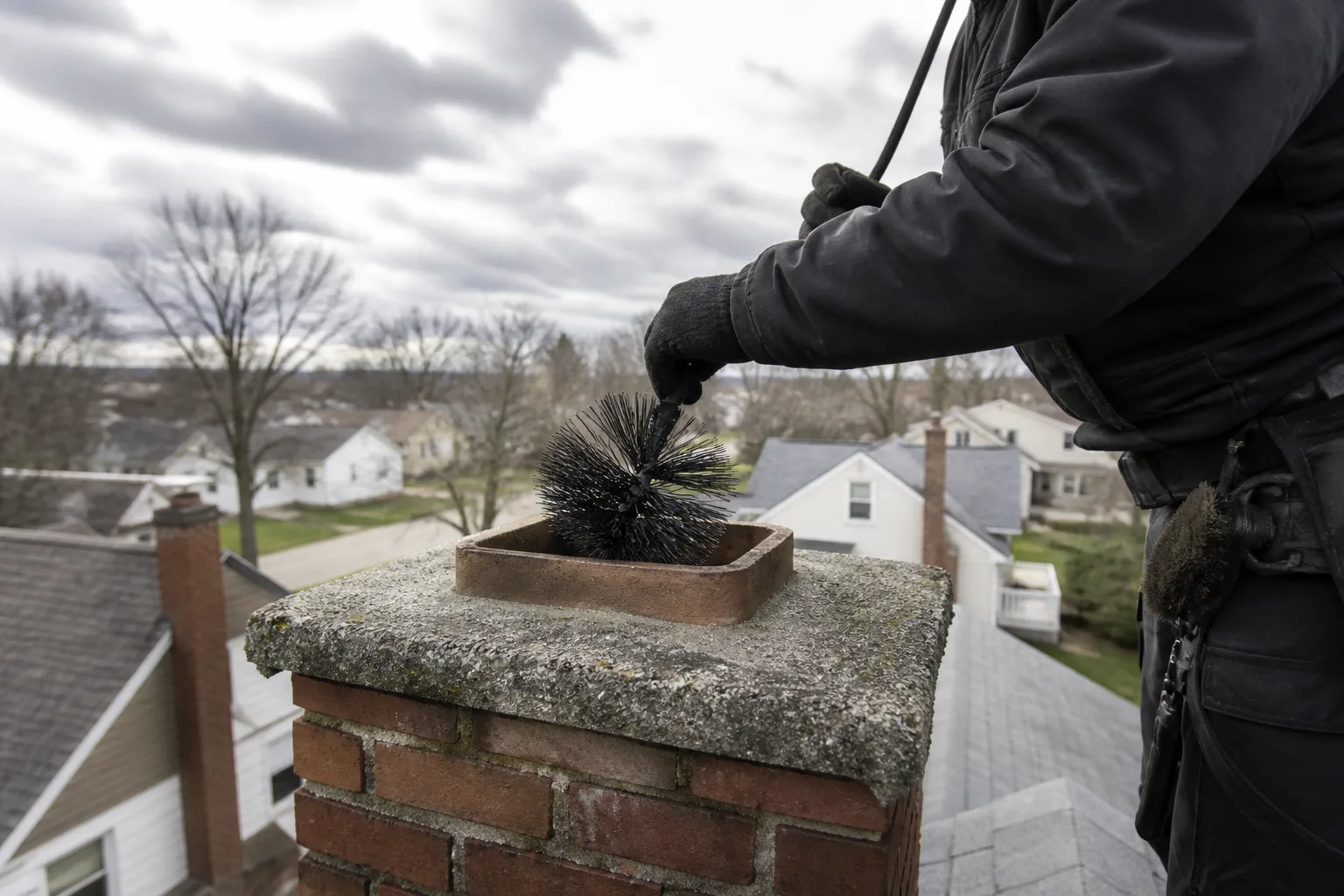
Close the firebox doors, seal the room from the rest of the house, and don’t try to smoke the animal out. A bird, squirrel, or raccoon trapped in a flue can fall into the firebox and panic. Opening the damper and the firebox to “let it out” usually just moves the problem into the living room. Call a sweep. We deal with this on masonry chimneys all over Fort Wayne, and it’s usually a quick, humane extraction with a flue brush and a net.
3. Carbon monoxide suspicion
Get out of the house, call 911, and don’t re-enter until the fire department clears it. Don’t run the fireplace to “test” it. CO is odorless, and a chimney that’s blocked or cracked can push it back into the living space without any smoke. After the fire department clears the house, that’s when a chimney inspection comes next. A live CO alarm with a fire appliance in use is a same-day issue, not a tomorrow issue.
4. Sudden heavy backdraft
Open a window on the same side of the house as the chimney, then check the damper. Backdraft is often a pressure problem, not a fire hazard. A cold flue, a tightly sealed newer house, or a bathroom fan running against your chimney can all push smoke back into the room. Once the flue warms up and the pressure balances, the smoke usually clears. If it keeps happening after a warm-up fire, that’s a sweep appointment, not an emergency.
What to Do (and Not Do) in the Minutes Before Help Arrives
The instinct is to open every window and door. Sometimes that’s exactly right. Sometimes it’s the wrong move. Here’s the honest breakdown.
- Backdraft or smoke spill: Open a window on the same side as the chimney. The fresh air relieves the pressure imbalance and lets the flue draft again. Don’t open doors on the opposite side of the house; that can make it worse.
- Carbon monoxide or a suspected chimney fire: Don’t open windows. Get out. Opening windows feeds oxygen to a fire and gives CO more room to spread. The fire department handles it from there.
- Animal intrusion: Don’t open windows to “flush it out.” Close the firebox, seal the room, and wait for a sweep.
- Any fire in the fireplace that won’t stay lit: Close the damper fully and leave the house if you smell gas.
One more thing to avoid: running the furnace or another gas appliance while you’re waiting. If the chimney is compromised, combustion gases have somewhere else to go. Leave the appliances off until a technician clears the flue. We’ve pulled plenty of Fort Wayne chimneys where the real story was a blocked flue feeding a gas furnace, not the fireplace at all.
How to Tell From Outside Whether a Chimney Fire Is Active or Already Out
Stand across the street and look at the chimney top. An active chimney fire often shows visible flame or thick, dark smoke rolling from the top of the flue. A fire that’s already burned itself out usually shows no smoke at all, but the masonry may look scorched or discolored near the crown, or the cap may be warped. A creosote-scented smell outside the house is another sign a fire happened recently.
If a chimney fire is active: 911. If it’s already out: a chimney inspection within days, before you light another fire. The distinction matters because the two paths are different calls, and a homeowner who calls a sweep for an active fire is losing time they don’t have. The fire department is the first call; the sweep is the second.
What Information to Have Ready When You Call a Sweep
An emergency call isn’t the time to describe your chimney from scratch. A few details let a technician pre-stage the right equipment before they leave, which cuts down on wasted trips to the shop and lets us bring the correct brush, mirror, and repair materials the first time.
- What kind of chimney: masonry with a clay tile liner, metal with a factory-built flue, or a gas insert. Each needs a different brush and a different safety setup.
- What you saw or smelled: smoke, creosote odor, soot falling into the firebox, soot on the hearth, animal noises, or a CO alarm.
- When the fireplace was last used and what you burn: wood, gas, or a pellet insert changes how we approach it.
- Whether the fire department has been involved: if so, they may already have flagged the flue as compromised.
- Where the chimney sits on the house: interior or exterior wall. An exterior chimney in Fort Wayne takes more weather, and the liner condition often reflects it.
Which Chimney “Emergencies” Can Safely Wait Until Morning
Here’s the part most companies don’t tell you: a good chunk of what feels like an emergency can wait. Smoke smell from a cold fireplace, a damper that’s a little sticky, a soot flake on the hearth, or a fireplace that’s drafting poorly but not backing up into the room are all morning appointments. They need a sweep and an inspection, not a middle-of-the-night dispatch.
The ones that can’t wait are the ones with a no-fire rule attached. Carbon monoxide, an active chimney fire, a flue that’s actively backing smoke into the living space, and animal intrusion with a live animal trapped in the flue all need a same-day assessment, regardless of cost. When you’re in that category, we want you to call it that way, so we know to put the right priority on it. We don’t charge more for it, but we do want to know what we’re walking into.
When to call a pro
If you can’t trace the source in fifteen minutes, or if any of the four situations above match what you’re seeing, call a pro. A chimney sweep who can’t do the repair is only half the job. Our team handles the sweep, the inspection, and the repair under one roof, so you’re not handed off to a second contractor once the problem’s found. Liner integrity isn’t optional. It’s the difference between a working fireplace and a fire hazard, and a cracked flue is not something to guess at from the outside.
Related services in Fort Wayne
If you’re sorting out what happened to your chimney, start with a chimney sweep and an inspection. If the inspection turns up damage, our chimney repair team can take it from there. And if you want to see what else we do across Fort Wayne, start at the Fort Wayne Chimney Sweep home page. The products we carry, DuraFlex, HeatShield, Gelco, and others, are on the shelf because no two chimneys need the same fix.
The Bottom Line
In a chimney emergency, the first few minutes decide the outcome. Get out if it’s a fire or CO. Open a window on the same side if it’s a backdraft. Seal the room if it’s an animal. Then call for help with the details that let us pre-stage the right equipment. We’ve seen a lot of Fort Wayne chimneys, and the pattern is consistent. The homeowners who stay calm and follow a short list end up with a smaller problem than the ones who guess.
If you’re in Fort Wayne and need help, Fort Wayne Chimney Sweep offers free estimates. Call (866) 589-6152. We answer 24/7. Fast dispatch from 7am to 7pm, Sunday through Friday, and we’re closed Saturday. A safety emergency can happen on a Saturday, and we’ll book you into Sunday’s opening. Our technicians have up to experience, and we inspect, clean, and repair under one roof. It’s all we do, which means we’re better at it.
Frequently Asked Questions
Close the damper and look for the source of the smell before you call anyone. Check the firebox for ash and the hearth for soot, then confirm the fireplace is actually off. Smoke smell from a cold fireplace is usually a drafting issue or a creosote buildup, not an emergency. If the smell is strong, or if you have a gas appliance on the same flue, get out and call 911. Call (866) 589-6152 if you want a sweep to look at it. Estimates are free.
No. Don’t light another fire until a chimney inspection confirms the flue is intact. A chimney fire can crack clay tile and leave creosote behind in a way that’s invisible from the firebox. Calling a sweep for an inspection is the right next step, and it’s not optional. Call (866) 589-6152 for an exact quote on the inspection. Estimates are free.
Look at the chimney top from across the street. Active flame or thick dark smoke means it’s still burning, and you call 911. No smoke at all plus a scorched cap or discolored masonry means it likely burned out, and you call a sweep for an inspection within days. Call (866) 589-6152 if you’re not sure. Estimates are free.
Open a window on the same side of the house as the chimney for a backdraft or smoke spill. Don’t open windows for a suspected chimney fire or carbon monoxide. In those cases, get out and call 911. Call (866) 589-6152 if the smoke clears but keeps happening. Estimates are free.
Written by the team at Fort Wayne Chimney Sweep.
Need Chimney Cleaning Help?
Call Fort Wayne Chimney Sweep - licensed & insured, here with fast help in Fort Wayne.
(866) 589-6152