
Last updated November 15, 2026
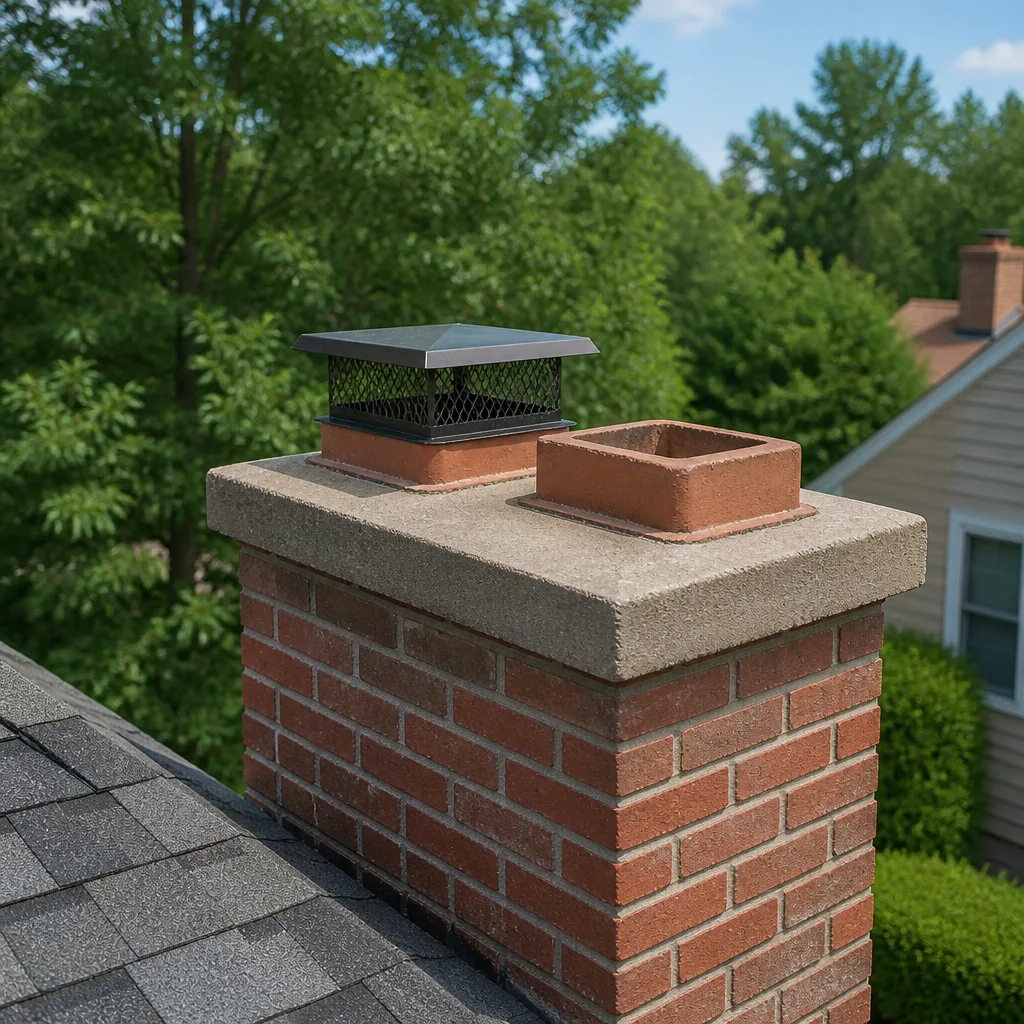 Sweep & inspection
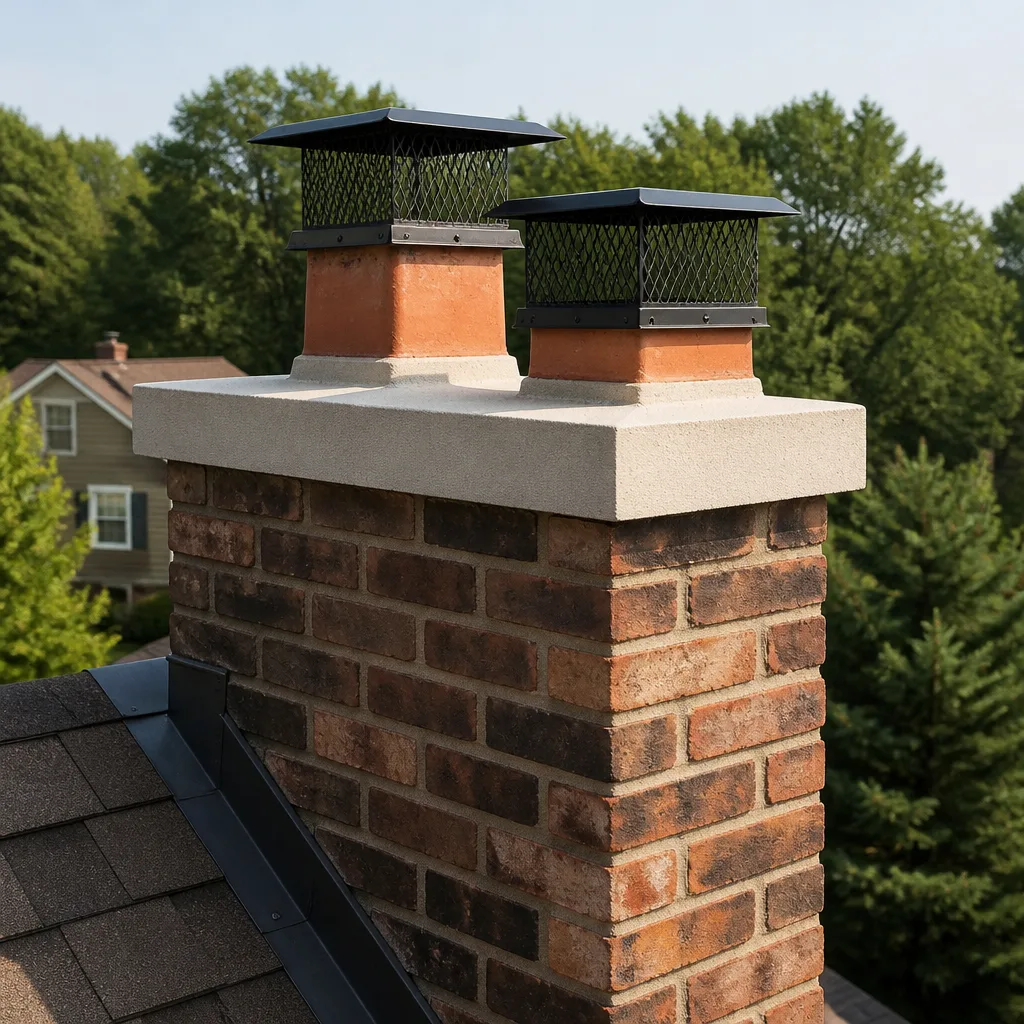 Caps & crowns
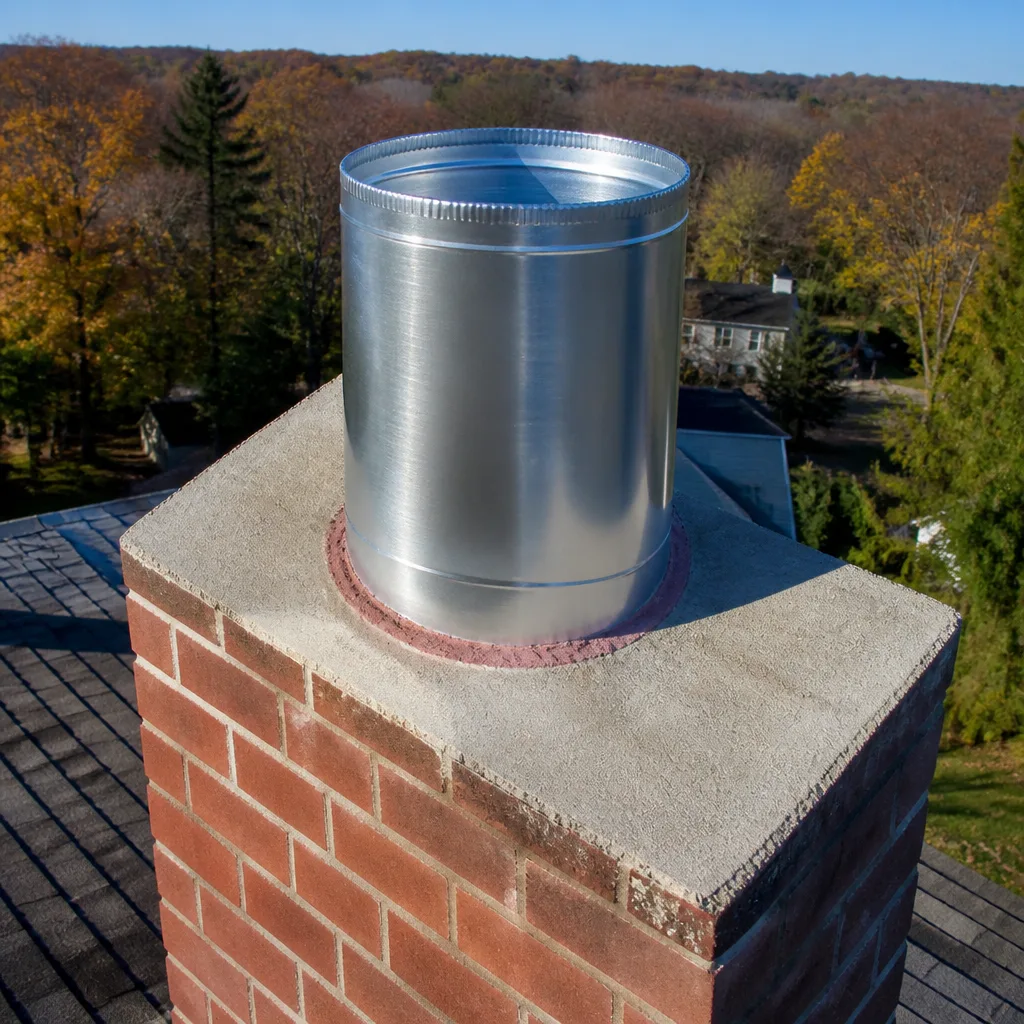 Flue relining
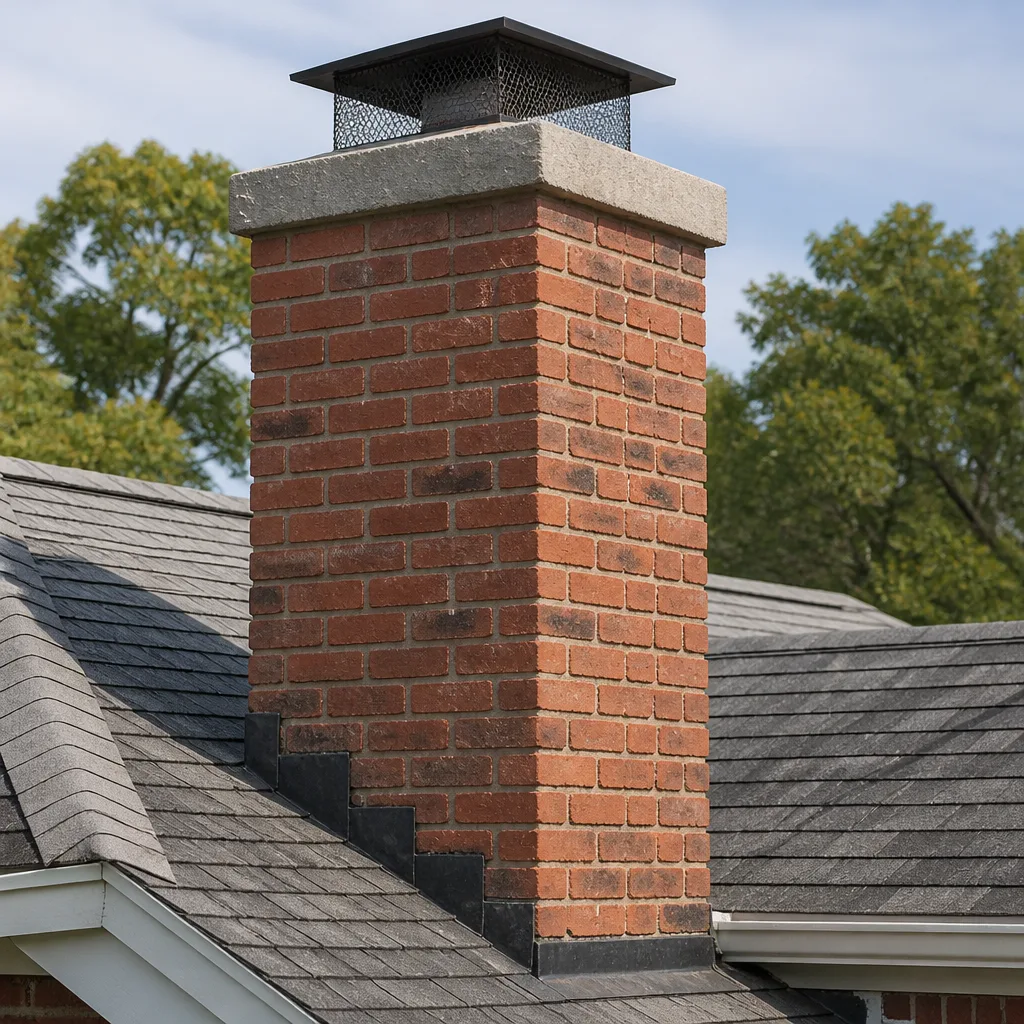 Masonry repair
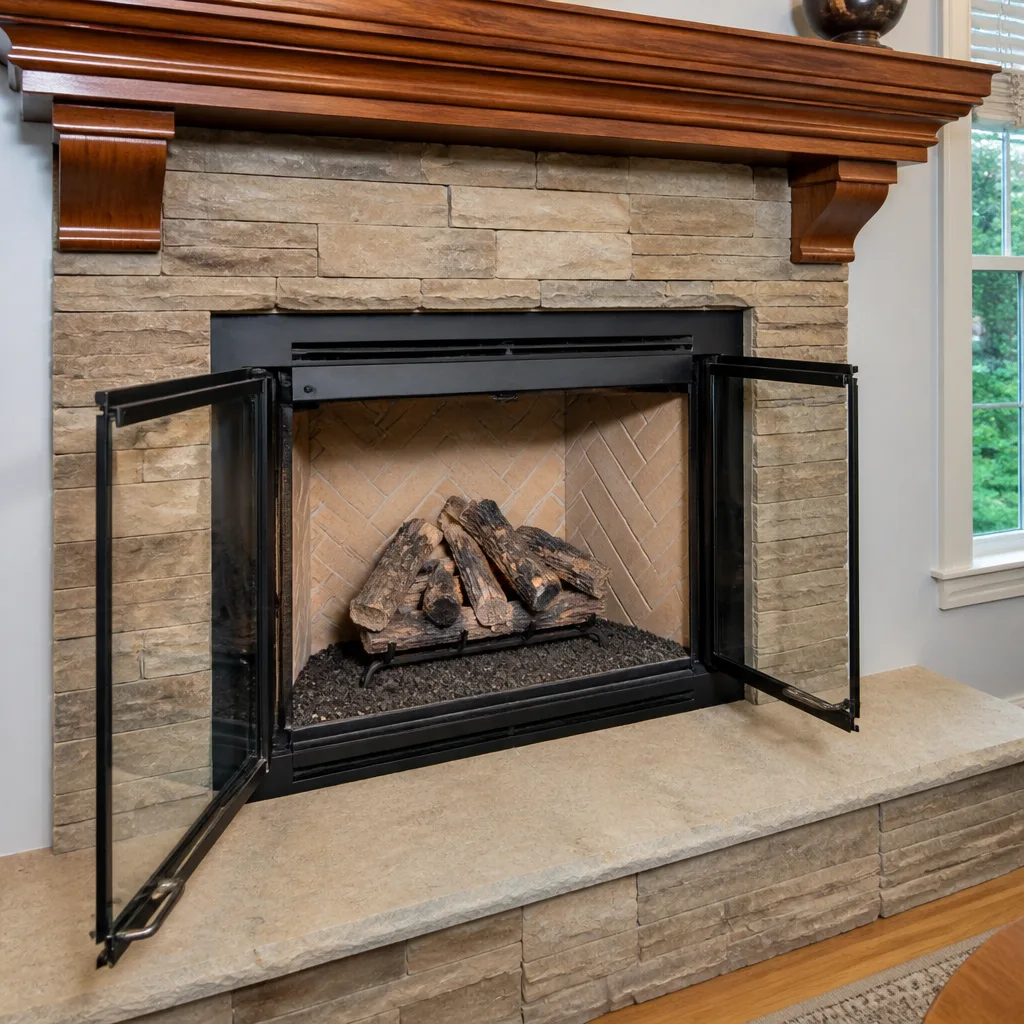 Gas fireplace service
Level 1 sweep and inspection to the NFPA 211 annual standard - flue, crown, cap, and flashing checked and photographed
Chimney sweep logs do not sweep chimneys. They loosen some creosote - which then falls where a brush and vacuum still have to collect it.
Chimney Cleaning Emergency Preparedness Guide for Fort Wayne Homes
A chimney fire doesn’t announce itself with a bang. The sound most homeowners describe is a low roar, sometimes compared to a freight train moving through the wall, sometimes to a distant jet. That quietness is the problem. Because the noise is muffled and the fire is contained inside masonry, the instinct is to open the damper wide and “give it air” – and that instinct is exactly backwards. More air feeds the burn instead of starving it. This guide covers what a chimney emergency actually looks like in Fort Wayne, the correct response sequence for chimney fires, carbon monoxide events, and animal blockages, and the documentation steps that matter afterward. Our goal is simple: give you a plan before you ever need one.
Quick Answer
If you suspect a chimney fire: close the damper, get everyone out, and call 911. If you suspect carbon monoxide: leave the house immediately and call 911 from outside. For animal blockages, stop using the fireplace and schedule an inspection before lighting another fire. After any emergency, get a professional chimney inspection before resuming use – structural damage and cracked flue tiles are often invisible from the firebox. Call (866) 589-6152 for a post-emergency inspection in Fort Wayne.
Styles & brands we work with
- Sweep & inspection
- Caps & crowns
- Flue relining
- Masonry repair
- Gas fireplace service
Table of Contents
- How to Recognize a Chimney Fire From Inside a Fort Wayne Home
- The Correct Response Sequence for a Chimney Fire
- Carbon Monoxide Events: Symptoms, Sources, and Evacuation
- Animal Blockages and Why the Chimney Must Be Inspected First
- What to Tell the Dispatcher vs. What to Tell the Chimney Specialist
- Post-Emergency Documentation and Indiana Insurance Claims
- Prevention Habits for Fort Wayne Chimneys
- Why Post-Emergency Inspection Isn’t Optional
How to Recognize a Chimney Fire From Inside a Fort Wayne Home
Chimney fires come in two types, and only one of them is dramatic. A free-burning chimney fire is loud, visible, and often terrifying – roaring, crackling, sometimes accompanied by visible flames or sparks at the top of the chimney, and black or grey smoke billowing into the yard. A slow-burning chimney fire is the opposite: quiet, smoldering, and easy to miss entirely. The slow kind can burn for hours inside the flue, damaging tiles and mortar without anyone noticing until a later inspection reveals it.
What to look for:
- Sound: A low, rumbling roar from within the chimney, or a sound like a passing train. Sometimes described as a “distant roar” or “rushing air.”
- Smell: A hot, sharp, tarry odor – stronger than the usual woodsmoke smell, sometimes with a chemical edge to it.
- Visual signs from outside: Sparks or flames visible at the chimney top, dense smoke, or a “smoking” chimney that keeps smoking after the firebox has cooled.
- Visible signs inside: Warped or discolored damper, cracked firebox masonry, or pieces of creosote falling into the firebox.
- Puffy, honeycombed creosote: If you can see the flue interior even partially and the creosote has expanded into a puffy texture, a fire has likely already occurred.
In our experience, the most common recognition failure is homeowners mistaking a slow-burning chimney fire for a stuck flue or a warming smell. Anything that sounds unfamiliar inside the chimney after ignition deserves a call to 911 and a professional chimney inspection. Fort Wayne homes with older masonry chimneys – particularly in the neighborhoods north of downtown where prewar housing stock is common – are more likely to have accumulated creosote that ignites easily.
The Correct Response Sequence for a Chimney Fire
The window between recognizing a chimney fire and taking the wrong action is short. Here’s the correct sequence, in order.
- Close the glass doors or fire screen, then the damper. This is the counterintuitive one. Do not open the damper. Starve the fire of oxygen by closing everything you can.
- Get everyone out of the house. Don’t stop to gather belongings. Chimney fires can spread into roof framing and wall cavities in minutes when the flue has failed.
- Call 911 from outside. The Fort Wayne Fire Department needs to know it’s a chimney fire and whether you can see flames or smoke from the chimney top.
- Don’t spray water down the flue. A sudden temperature shock can crack masonry or flue tiles, and it rarely reaches the fire at the source.
- If a fire extinguisher is nearby and the fire is contained to the firebox, use it. If the fire has moved beyond the firebox or you can’t see it clearly, get out and stay out.
- Don’t re-enter until fire crews clear the house. Carbon monoxide and structural damage are invisible from the doorway.
- Schedule a professional inspection before you use the fireplace again. This is where most homeowners skip a step, and it’s the step that matters most.
A chimney fire compromises the flue in ways you can’t see. Cracked clay tiles, displaced mortar joints, warped dampers, and damaged liners are all common. Resuming use without an inspection risks a second fire or carbon monoxide leaking into the home. A professional chimney inspection confirms whether the flue is still sound, and a repair is often less involved than homeowners expect.
Carbon Monoxide Events: Symptoms, Sources, and Evacuation
Carbon monoxide is the emergency most Fort Wayne homeowners underestimate, because it doesn’t look or smell like anything. It’s a colorless, odorless gas produced by incomplete combustion – and a compromised chimney flue is one of the most common ways it enters a home.
Symptoms to recognize:
- Headache that improves when you leave the house and returns when you come back
- Dizziness, nausea, or a general sense of “feeling off”
- Shortness of breath or chest tightness
- Confusion, drowsiness, or difficulty thinking clearly
- Multiple people (or pets) in the same household feeling unwell at the same time
Source identification matters, but not during the event. Get everyone outside and call 911 first. Once the house is cleared and ventilated, a professional can inspect the chimney and appliance venting to find the source. Common Fort Wayne sources we see include:
- Cracked or deteriorated flue tiles – gases escape through the crack into the surrounding masonry, then into the house
- Blocked flues – nests, debris, or a fallen liner section trapping exhaust inside the house
- Backdrafting from a gas insert or furnace – the venting is pulling the wrong direction, often because of house pressure issues or a partially blocked flue
- Disconnected or damaged appliance connectors – gas appliances with a loose vent collar
Evacuation protocol: everyone out, and call 911 from outside. Don’t open windows and stay inside “just to air it out.” Don’t try to ventilate the house manually. Fire crews carry meters that identify CO levels and confirm when the structure is safe to re-enter. Once cleared, the next call is to a chimney specialist for an inspection and repair estimate – not a handyman, and not an HVAC generalist.
Animal Blockages and Why the Chimney Must Be Inspected First
Fort Wayne sits between the St. Marys, St. Joseph, and Maumee rivers, and the wooded river corridors, older neighborhoods, and surrounding farmland support a healthy population of squirrels, raccoons, birds, and chimney swifts. Older chimneys with open or lightly screened flue tops are prime nesting real estate.
Signs of an animal blockage:
- Scratching, scurrying, or chirping sounds from the chimney, especially at dawn or dusk
- A strong odor of droppings or decay coming from the firebox
- Smoke backing into the room when the fireplace is lit – a sign the flue is partially or fully blocked
- Visible nesting material falling into the firebox
- An animal visible at the chimney top or on the roof
Do not light a fire to “smoke out” an animal. This is the most dangerous of the DIY responses. It can start a chimney fire, trap the animal higher in the flue, and fill the home with carbon monoxide from the blocked venting. Burning a fire in a blocked flue is how a manageable nuisance becomes an emergency.
The correct response is:
- Stop using the fireplace immediately.
- Open the firebox door or damper – but from outside the firebox, not directly above. Some animals can be released this way and will leave on their own.
- If the animal doesn’t leave or you can’t confirm the flue is clear, don’t try to remove it yourself.
- Call a chimney specialist for an inspection and removal before resuming use.
An inspection confirms the flue is clear, the liner wasn’t damaged by the animal, and the chimney cap is secure enough to prevent a repeat. Sweeping and inspection in Fort Wayne covers this ground routinely – a proper chimney cap, correctly installed, is the single most effective preventive step.
What to Tell the Dispatcher vs. What to Tell the Chimney Specialist
These are two different conversations with two different jobs, and confusing them wastes time and information.
What the 911 dispatcher needs
- Your address, and the nearest cross street if they ask
- What’s burning: “It’s a chimney fire” or “I think there’s a chimney fire” or “I have carbon monoxide”
- Whether everyone is out of the house
- Whether you can see flames or smoke from the chimney top from outside
- Whether anyone is experiencing symptoms (headache, dizziness, confusion) – especially relevant for carbon monoxide
- Whether the fireplace is wood-burning or a gas insert (the dispatcher needs to know what’s venting)
Give short answers. Don’t narrate. The dispatcher is putting units in motion and confirming what equipment to roll.
What the chimney specialist needs
- What happened (a full chimney fire, a suspected slow burn, a CO alarm, a blockage)
- Whether fire crews already cleared the structure and whether they noted damage
- The age and type of chimney – masonry or prefabricated, and whether it has a stainless liner
- Whether there’s visible damage at the firebox, damper, or chimney crown
- Any prior chimney issues or recent chimney work
- What you want quoted: inspection only, inspection plus repair estimate, or a documented report for your insurer
Urgency is different too. The dispatcher’s conversation is immediate – seconds matter. The specialist’s conversation is next-step – the emergency is over, and what’s needed now is documentation, inspection, and a repair estimate. If you’re in Fort Wayne and the emergency has been cleared by fire crews, call Fort Wayne Chimney Sweep at (866) 589-6152 and say what happened. We’ll book an inspection and tell you what we find.
Post-Emergency Documentation and Indiana Insurance Claims
Most homeowner insurance policies in Indiana cover chimney fire damage, but only if the claim is documented properly. What you do in the first 24 hours after a chimney fire directly affects whether the claim goes smoothly or turns into a dispute.
Photograph these, before anything is cleaned or moved
- The firebox, from multiple angles and in good light
- The damper and its position (open, closed, or warped)
- The chimney exterior, including the crown and any visible cracks or displacement
- Any debris, soot, or creosote fragments that fell into the firebox or onto the hearth
- Smoke damage inside the room, if any
- Anything the fire crews noted or tagged (get a copy of their report number)
Do not do these things before the inspection
- Don’t sweep the chimney. The technician needs to see the creosote distribution to assess the fire’s intensity
- Don’t discard damaged components – warped dampers, cracked tiles, or broken parts are evidence for the claim
- Don’t have a second contractor repair the chimney before the inspection – you lose the ability to document what was originally there
- Don’t try to “clean up” soot stains from walls or ceilings before documenting them
For the insurance claim
Most carriers want the fire department report, photos, and a written inspection report from a chimney professional. That inspection report is where a specialist makes the difference – a detailed written report documenting structural damage, liner condition, and repair recommendations gives the adjuster what they need. We put that report together as part of the inspection. If the chimney needs relining, we have access to DurFlex liner systems, and for ceramic flue resurfacing, HeatShield – both commonly specified after fire damage where the tiles are compromised but the chimney structure is still sound.
Prevention Habits for Fort Wayne Chimneys
The single most effective way to avoid a chimney emergency is to keep creosote from accumulating to a dangerous level. Creosote comes in three grades, and the third is the one that causes chimney fires. A professional cleaning removes all three before they become a problem.
Prevention habits that matter in Fort Wayne:
- Annual chimney sweep and inspection. Even if you burn only occasionally, an annual chimney sweep is the baseline. Wood-burning fireplaces, gas inserts, and older masonry chimneys all need eyes on them at least once a year.
- Burn seasoned wood only. Green or wet wood produces more creosote. Any firewood you buy should be dried for at least a season, and stored covered.
- Don’t burn trash, cardboard, or wrapping paper. These flare hot and coat the flue with faster-building creosote.
- Keep the fire hot but not roaring. Long, slow, smoldering fires produce more creosote than hot, efficient ones.
- Install and check a chimney cap. A cap keeps rain, animals, and debris out of the flue.
- Test carbon monoxide alarms monthly. Replace batteries annually, and replace the alarm itself per its manufacturer’s instructions.
- Watch for the warning signs: a strong smell of smoke in the room when the fireplace is lit, a draft that pulls poorly, a fire that’s hard to start or smokes back, or visible creosote inside the firebox.
A regular chimney sweep is inexpensive relative to the cost of a chimney fire repair. The math isn’t close.
Why Post-Emergency Inspection Isn’t Optional
The most common reason a chimney emergency goes from manageable to expensive is the decision to skip the inspection. A chimney fire leaves damage that isn’t visible from the firebox, and continuing to use the fireplace after one is how a fixable flue becomes a structural repair.
What a post-emergency inspection confirms:
- Flue integrity. Cracked clay tiles are common after a fire. A partial crack lets carbon monoxide into the masonry, and from there into the house.
- Damper condition. A warped damper doesn’t seal, which means heat and smoke don’t stay where they belong.
- Crown and mortar condition. Fire, heat, and freeze-thaw cycles in Fort Wayne winters stress the chimney crown and the mortar joints.
- Liner condition. A stainless liner may need replacement, or a ceramic tile flue may need resurfacing.
- Overall chimney structure. Chimney fires can crack masonry and displace bricks all the way up.
When the inspection does find damage, chimney repair is often less involved than the homeowner fears. A resurfaced flue using HeatShield is a fraction of the cost of a full reline, and a DuraFlex liner install is a single-day job in most cases. What matters is that the fix is matched to the damage. Call (866) 589-6152 for a post-emergency inspection in Fort Wayne – estimates are free.
Common Mistakes to Avoid
- Opening the damper wide during a chimney fire. This is the instinct that turns a manageable fire into a dangerous one. Close the damper, close the glass doors, get out, and call 911.
- Burning a fire to smoke out an animal. A blocked flue plus an open fire equals carbon monoxide in the house. Stop using the fireplace and get an inspection.
- Spraying water down a hot flue. Thermal shock cracks masonry and tiles. It rarely reaches the fire at its source.
- Skipping the post-fire inspection. Warped dampers, cracked tiles, and compromised masonry are invisible from the firebox. Using the fireplace after a fire without an inspection is how a fixable problem becomes major structural damage.
- Letting a generalist handle the repair. A handyman or general HVAC contractor can draft a quote, but a chimney specialist works with chimney-specific materials and systems every day. A sweep-only chimney service is only half the job if the repair requires relining or resurfacing – the best single-crew option is one that sweeps, inspects, and repairs, so you’re not handed off to a second contractor mid-project.
- Calling the insurance company before the inspection. Document the damage first, get the inspection report, then file. An inspection report with photos and a repair estimate is the adjuster’s starting point, not the other way around.
- Not knowing the difference between a chimney fire and a chimney blockage. A slow-burning fire can be mistaken for a stuck flue, and a blocked flue can be mistaken for a fire. An inspection is the only way to tell.
See the difference
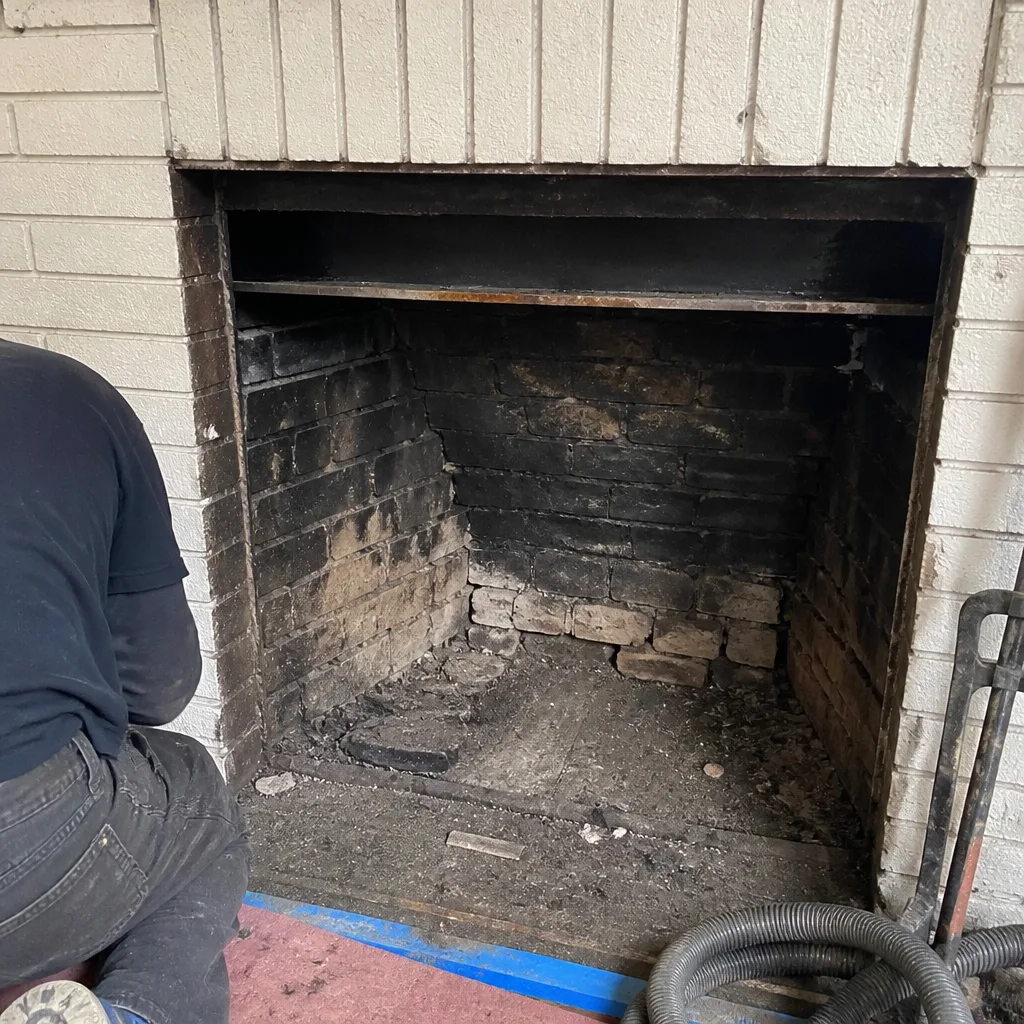 Before
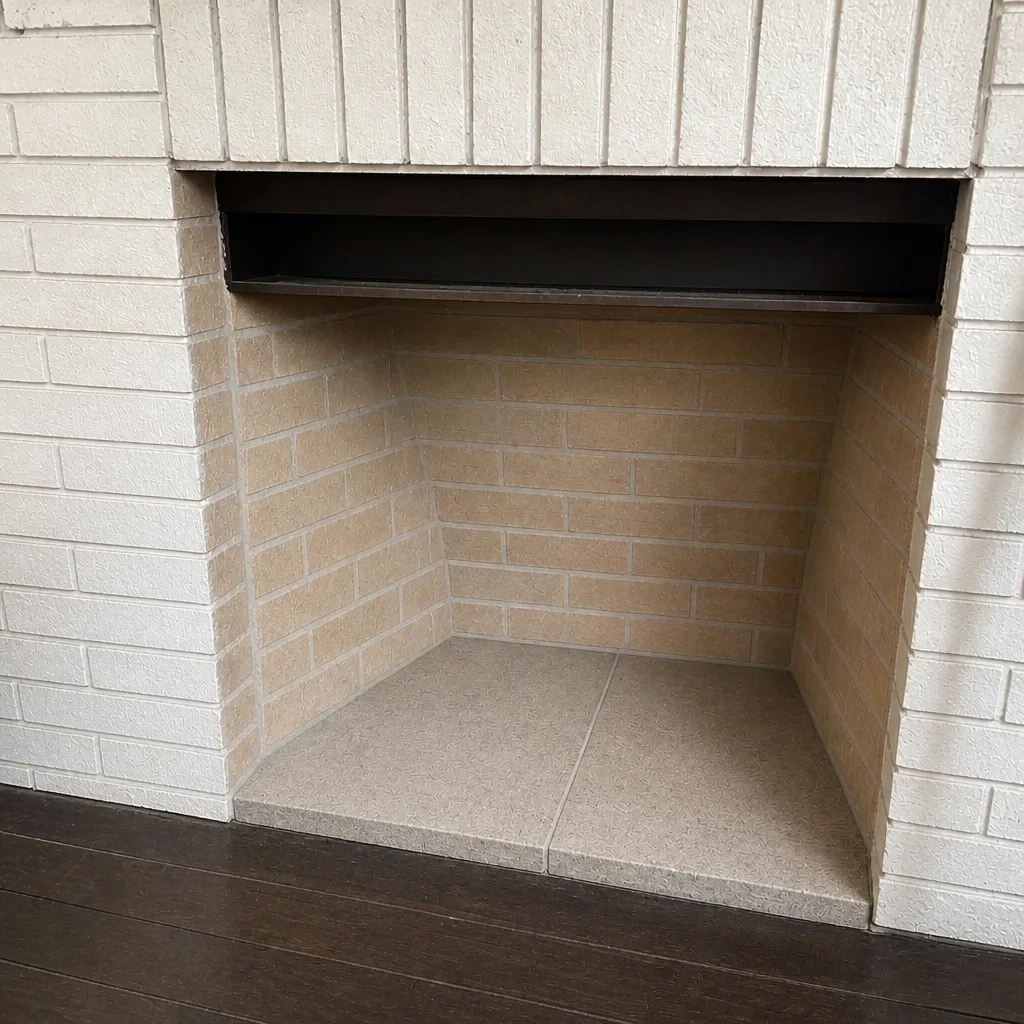 After
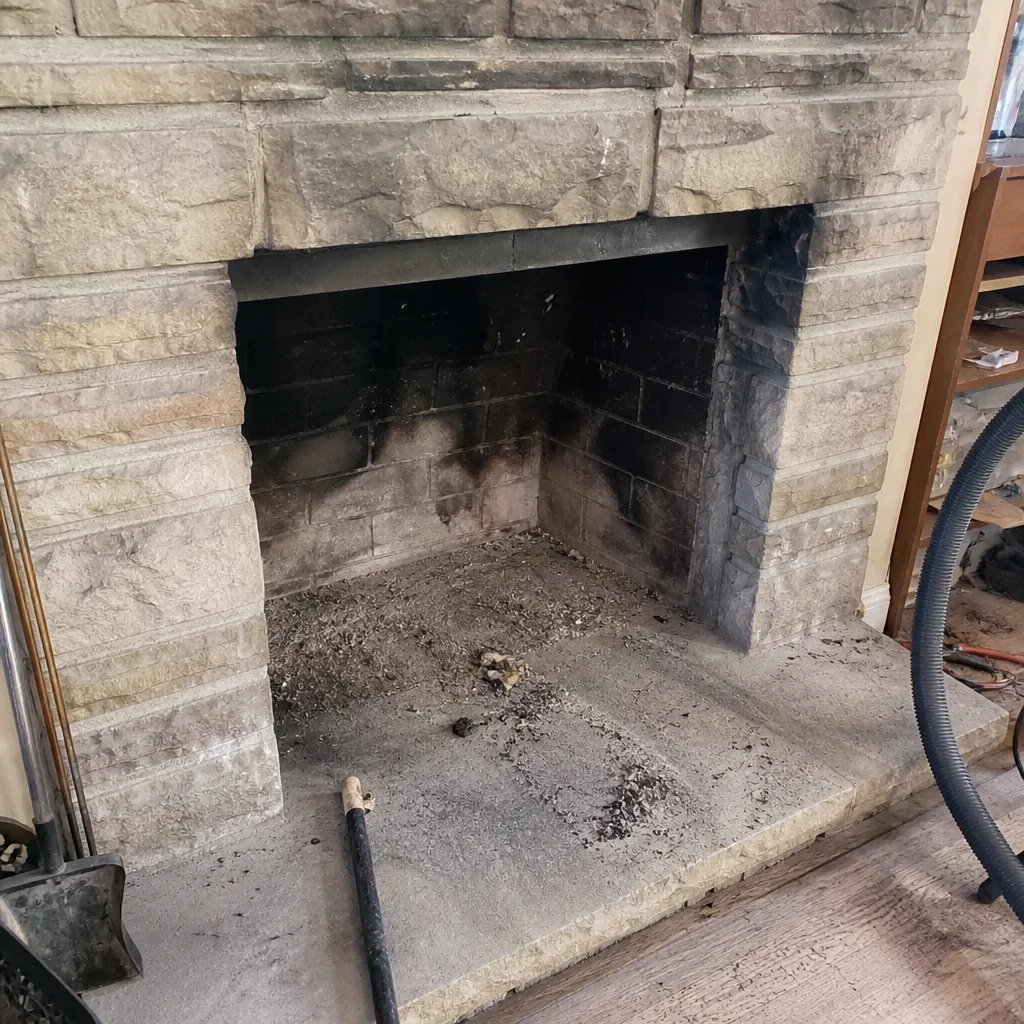 Before
 After
 Before
 After
When to Call a Professional
Call immediately after: any chimney fire (even a suspected one), any carbon monoxide alarm, any animal blockage you can’t confirm is clear, or any time smoke comes back into the room when the fireplace is lit. Call before: your first fire of the season if the chimney hasn’t been swept in over a year, if you’re buying a home with a wood-burning fireplace and no inspection on record, or if you’ve noticed a strong smoke smell or visible creosote inside the firebox. Fort Wayne Chimney Sweep offers free estimates in Fort Wayne – call (866) 589-6152. In our experience, the homeowners who call before the emergency are the ones who never have one.
Frequently Asked Questions
A chimney fire usually sounds like a low roar or a freight train moving through the wall – not an explosion or a pop. The sound is muffled because the fire is contained inside masonry, which is why some homeowners miss it. A quieter slow-burning chimney fire may produce no more than a tarry smell and a low rushing sound. If anything in the chimney sounds unfamiliar after ignition, close the damper, get out, and call 911 – then call (866) 589-6152 for a post-emergency inspection.
No. Opening the damper feeds the fire oxygen and accelerates the burn instead of starving it. The correct sequence is: close the glass doors or fire screen, close the damper, get everyone out, call 911 from outside, and don’t spray water down the flue. Once fire crews have cleared the house, call (866) 589-6152 for a chimney inspection before using the fireplace again.
If anyone in the house has a headache that improves when they leave, dizziness, nausea, confusion, or chest tightness, treat it as a carbon monoxide emergency and call 911 from outside. A draft problem alone doesn’t cause those symptoms. Once the house is cleared, a chimney inspection finds the source – commonly a cracked flue, blocked venting, or a gas appliance pulling the wrong way. For that inspection, call (866) 589-6152.
Yes. A “small” chimney fire can crack flue tiles, warp a damper, and compromise mortar joints without any visible damage from the firebox. Using the fireplace after a chimney fire without an inspection is how a manageable repair becomes major structural work, and it’s also a carbon monoxide risk. A post-fire inspection is the step that determines what, if anything, needs to be repaired – call (866) 589-6152 to book one.
Most Indiana homeowner policies cover chimney fire damage, but only if the claim is documented. Photograph the firebox, damper, chimney exterior, and any debris before cleaning anything, and don’t discard damaged components before inspection. A written inspection report from a chimney specialist – including photos and a repair estimate – is what most adjusters want alongside the fire department report. We can provide that documentation as part of an inspection. Call (866) 589-6152 to schedule.
Sometimes – if the animal will leave on its own once the firebox door is opened from outside, that’s the safest outcome. Do not light a fire to smoke it out. If the animal doesn’t leave or you can’t confirm the flue is clear, stop using the fireplace and call for an inspection. A blocked flue is a carbon monoxide emergency waiting to happen. For Fort Wayne homes with older open chimneys, a properly installed chimney cap after removal is the single best prevention. Call (866) 589-6152 for the inspection and cap.
The Bottom Line
Chimney emergencies are manageable when there’s a plan and dangerous when there isn’t. The core sequence is simple: close the damper, get everyone out, call 911, and schedule a professional inspection before the fireplace is used again. Don’t open the damper during a fire, don’t burn a fire to smoke out an animal, don’t spray water down a hot flue, and don’t skip the inspection after a fire seems small. The five-to-ten minutes when a chimney emergency is unfolding are not when you want to be deciding what to do. Have the plan now – before the first cold morning around Fort Wayne.
Your Next Step
If you’ve had a chimney fire, a carbon monoxide alarm, an animal blockage, or you simply can’t remember the last time your chimney was inspected, call Fort Wayne Chimney Sweep at (866) 589-6152 for a free estimate. We inspect it, clean it, and fix what we find – inspection, sweeping, and repair from the same crew, so you aren’t handed off to a second contractor after a problem is found. We work with DuraFlex, HeatShield, Gelco, and Olympia Chimney because no two chimneys need the same fix. We answer 24/7. Fast dispatch from 7am to 7pm, Sunday through Friday. Chimneys, flues, and venting systems are all we do – and that focus shows in every inspection. Book a Fort Wayne Chimney Sweep visit today.
Written by the team at Fort Wayne Chimney Sweep.