
Last updated November 15, 2026
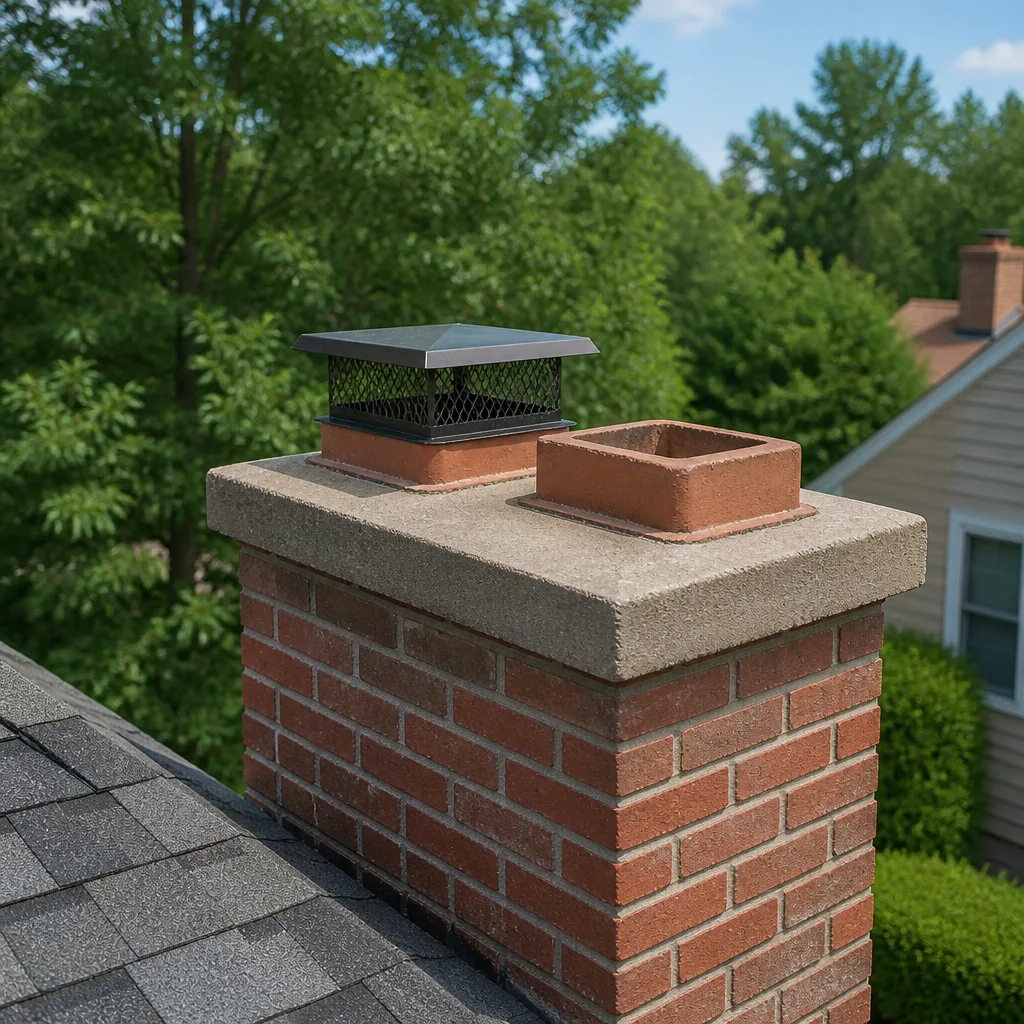 Sweep & inspection
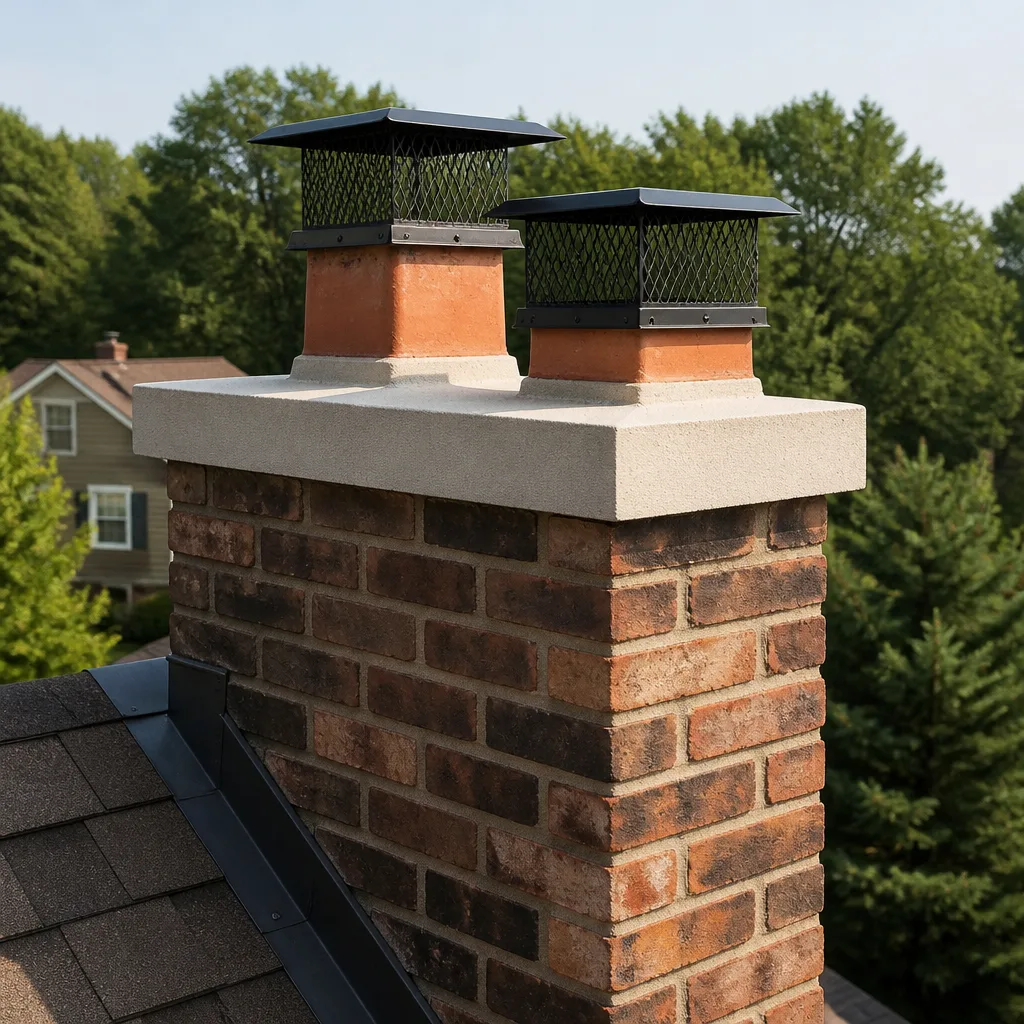 Caps & crowns
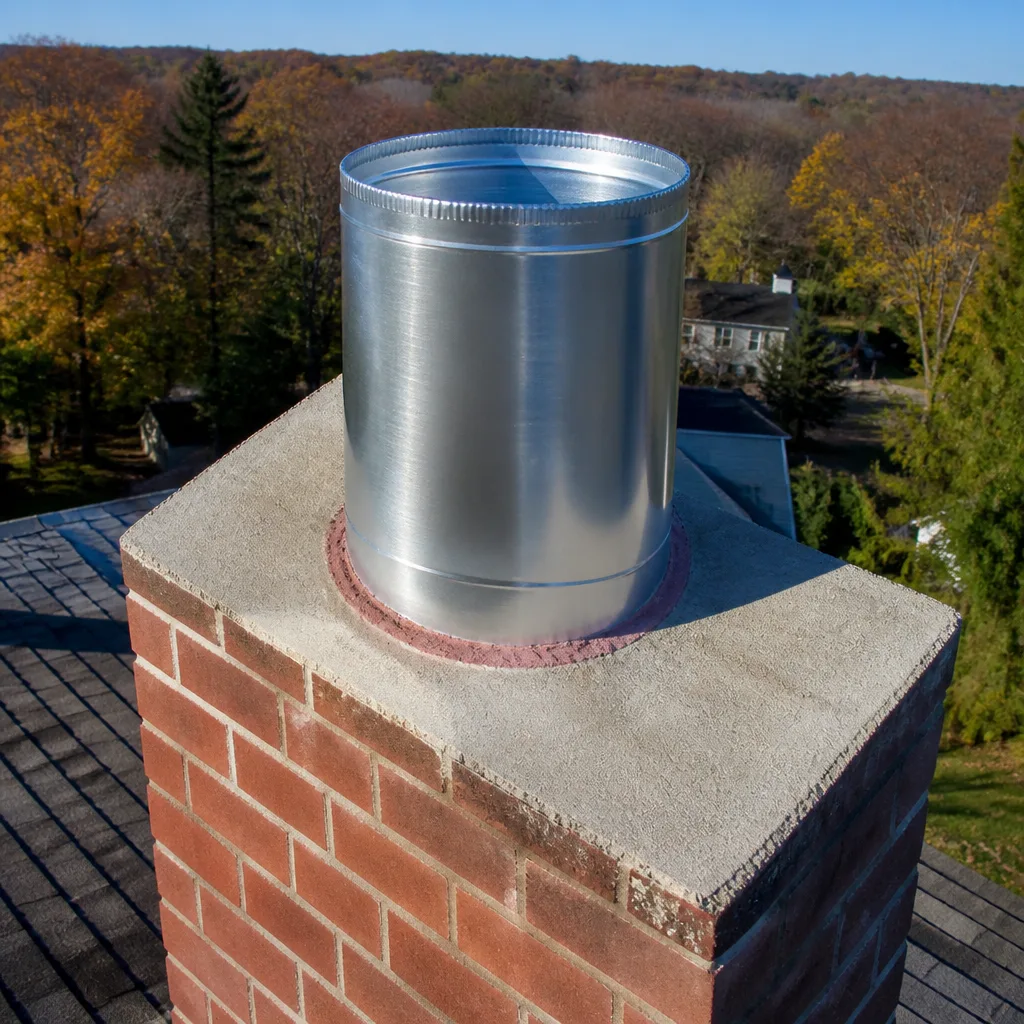 Flue relining
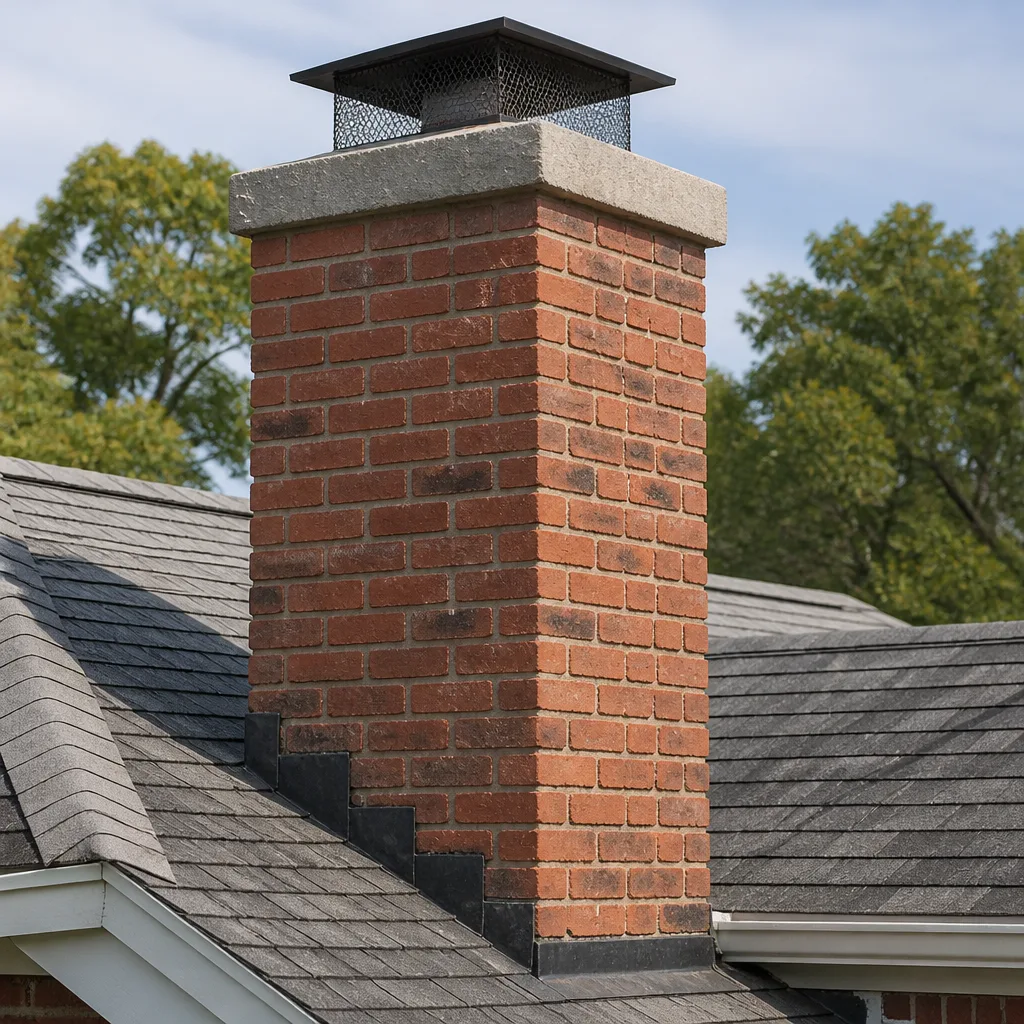 Masonry repair
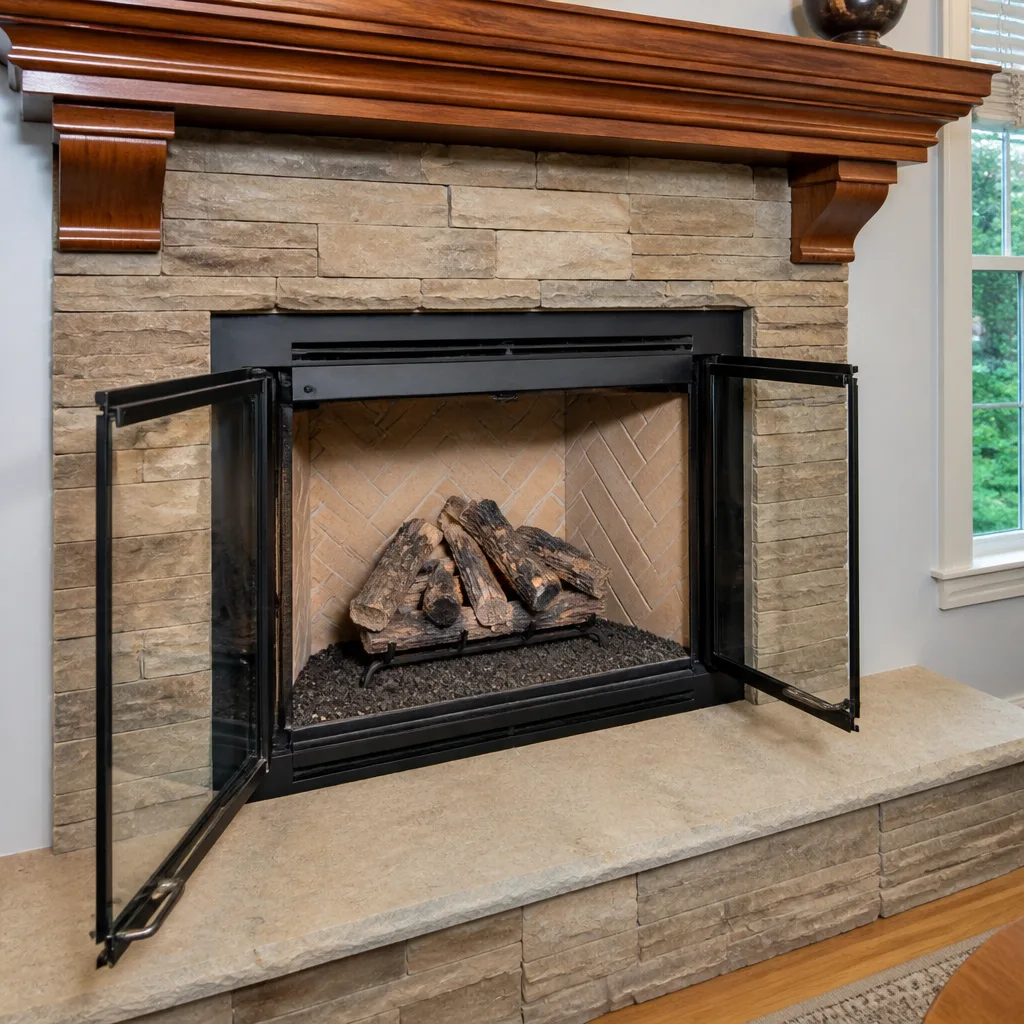 Gas fireplace service
Level 1 sweep and inspection to the NFPA 211 annual standard - flue, crown, cap, and flashing checked and photographed
Chimney sweep logs do not sweep chimneys. They loosen some creosote - which then falls where a brush and vacuum still have to collect it.
Chimney Sweep Troubleshooting in Fort Wayne: Common Problems and How to Fix Them
A smoky smell after rain and a smoky smell after a fire are two completely different problems. One points to a draft issue that may clear with a damper adjustment. The other likely means water is getting past the flashing or crown, and the smell is damp masonry you’ve been breathing in. Treat them the same way and you pay twice: once for the sweep that doesn’t solve it, and again for the repair you actually needed. This guide maps the symptoms Fort Wayne homeowners describe from the living room to their most probable mechanical causes, so you can speak accurately about your chimney before anyone picks up a brush.
Quick Answer
Most chimney problems in Fort Wayne trace back to four causes: a blocked or dirty flue, a draft imbalance, water intrusion through failing flashing or a cracked crown, or a deteriorated liner. Match the symptom to the cause before booking work. Backdraft and slow ignition usually point to draft. Staining, efflorescence, and musty smells after rain point to water. Smoke in the room on every fire and dark deposits at the top of the firebox point to obstruction or a damaged flue. Get the cause right first, and the repair follows.
Styles & brands we work with
- Sweep & inspection
- Caps & crowns
- Flue relining
- Masonry repair
- Gas fireplace service
Table of Contents
- The Symptom-to-Cause Matrix: What Your Chimney Is Telling You
- Why Does My Chimney Smell Like Smoke After Rain?
- Draft Problem or Relining Problem? How to Tell the Difference
- Why Fort Wayne’s Clay Soil and Freeze-Thaw Cycle Cause Chimney Problems
- A Basic Visual Check from the Firebox Opening
- Spalling, Efflorescence, and Heaving: Reading the Masonry
- Which Problems Need a No-Fire Quarantine and Which Can Wait a Season
- Creosote, Neglect, and the Problems That Build Quietly
The Symptom-to-Cause Matrix: What Your Chimney Is Telling You
Start with the symptom. Most homeowners describe what they see or smell, not what’s broken, and that’s fine. The work of troubleshooting is turning one into the other. Here’s how the common complaints map to probable causes in Fort Wayne homes.
| Symptom | Most Probable Cause | Urgency |
|---|---|---|
| Smoke rolls into the room on light-up, then clears | Cold flue, poor draft, or an undersized flue for the firebox opening | Low – monitor |
| Smoke in the room throughout the burn | Obstruction, cracked flue tile, or a blocked cap | High – stop burning |
| Smoky smell after rain | Water intrusion through flashing, crown, or mortar joints | Medium – inspect soon |
| Smoky smell after a fire, dry weather | Creosote buildup or a soot-loaded flue | Medium – schedule a sweep |
| White chalky stains on exterior brick | Efflorescence from moisture moving through masonry | Medium – find the water source |
| Brown or rust-colored staining on the ceiling or chimney breast | Failed flashing, cracked crown, or a missing rain cap | High – active leak |
| Fire won’t light easily or burns lazily | Draft issue, wet wood, or a cold column | Low – check wood first |
| Crumbling brick faces or flaking mortar | Spalling from freeze-thaw cycling | Medium to high |
| Chimney leaning or separating from the house | Foundation heaving or failed footing | High – structural |
Read that table twice if you need to. The symptom tells you what to look at, not what to fix. In our experience, the biggest waste of money on chimney work is paying for the repair the homeowner assumed was the problem rather than the one the inspection actually confirms. A smoky smell after rain and a smoky smell after a fire look identical from the couch. They aren’t the same problem, and the fix for one does nothing for the other.
This is also where a generalist loses you money. A handyman who also does a bit of chimney work isn’t set up to distinguish a draft failure from a flashing failure, and won’t have the material relationships to correct either. When you call a chimney repair specialist, the diagnostic step comes first and the repair follows from it.
Why Does My Chimney Smell Like Smoke After Rain?
Rain-driven chimney smells come from moisture, not from smoke still in the flue. Water entering the chimney system wets soot and creosote deposits, and that damp mixture gives off a strong smoky, sour, ashy smell that seeps into the room. The smoke smell is the symptom. The water is the problem.
There are five places water gets in, and they show up differently:
- Failed flashing. The metal seal where the chimney meets the roof. Rain running down the roof slope pools here. When the flashing lifts or the caulk fails, water tracks down the chimney breast and often shows as staining on the ceiling below.
- Cracked crown. The concrete cap at the very top. Freeze-thaw opens hairline cracks, water gets in, and the next freeze expands them. From the ground this often looks fine. Up close you can see the crack.
- Missing or damaged rain cap. Without a cap, rain drops straight down the flue. You’d be surprised how much water reaches the smoke shelf over a season.
- Open mortar joints. The mortar between the bricks is the first thing to wear. Water soaks in through the joints and wicks into the brick.
- Absorbing brick. Older brick that has never been sealed will hold moisture. This is the slowest cause and the one most often missed.
The test is simple. If the smell follows rain, you’re dealing with water. If the smell follows a fire and the weather is dry, it’s creosote and soot, and a sweep is the answer. If both are true, water is getting in and the deposits are wet. Get the water first. Sweeping a wet flue and leaving the leak intact just repeats the problem next rainy season.
Fort Wayne gets rain through the year and hard freezes in winter, which is a difficult combination. Water enters a cracked joint in November, freezes overnight, expands, and opens the joint a little more. By spring, a hairline problem is a real one. That’s why we treat water intrusion as the top of the troubleshooting list here, not the afterthought it becomes in drier climates. For homeowners in older neighborhoods, this is the recurring cause we see that general contractors don’t look for.
Draft Problem or Relining Problem? How to Tell the Difference
A draft problem is an airflow problem. A relining problem is a containment problem. They present differently, they’re fixed differently, and only one of them is expensive. Here’s how to distinguish them before you spend money on either.
Signs you’re dealing with a draft problem
- The fire draws fine in cold weather and smokes in mild weather.
- Smoke rolls out at start-up, then settles once the flue warms.
- Windy days make it worse.
- Backdraft when a kitchen fan or bathroom fan is running.
- Slow ignition with dry, well-seasoned wood.
- The firebox is large and the flue looks small by comparison.
Signs you’re dealing with a relining problem
- Smoke enters the room throughout the burn, not just at start-up.
- Dark streaks or soot deposits at the top of the firebox or around the damper frame.
- A musty or ashy smell in the room even when the fireplace is cold.
- Visible cracks or gaps in the clay tile when you look up from the firebox.
- Cross-joint gaps where a previous liner was installed with mismatched tile.
- A gas insert or a wood stove venting into an original clay flue that may not be sized or rated for it.
The practical difference: a draft problem can sometimes be corrected by adjusting the damper, raising the chimney height by a few courses, or fitting a top-sealing damper. A relining problem cannot be corrected any of those ways. It needs the flue restored or a new liner installed.
When relining is the answer, the decision is which method fits the chimney. For ceramic flues with cracks that haven’t lost structural integrity, a HeatShield restoration can resurface the flue and extend the liner’s working life without a full reline. For flues that are too far gone, a new DuraFlex liner system is the standard route. When you’re evaluating options, one of the questions to ask before anyone touches your chimney is which method they’re proposing and why. If the answer is “a full reline” with no discussion of restoration, ask the second question: “Could resurfacing work here?” A sweep who can resurface and reline will give you an honest answer. A sweep who can only reline won’t.
Why Fort Wayne’s Clay Soil and Freeze-Thaw Cycle Cause Chimney Problems
Fort Wayne sits on heavy clay soil that holds water. Clay expands when wet and contracts when dry, and around here that happens every year, repeatedly. A chimney footer poured into that soil is subject to a slow, patient cycle of movement that shows up as heaving, tilting, and masonry separation.
What that means for your chimney:
- Heaving at the base. The chimney’s foundation moves with the soil. Even a small amount of movement opens cracks in the exterior masonry and separates the chimney from the house wall.
- Freeze-thaw spalling. Water gets into the brick, freezes, expands, and pops the brick face off. Fort Wayne’s winter cycle of above-and-below freezing is what drives this. You don’t need extreme cold. You need wet brick and temperature swings.
- Flashing movement. When the chimney shifts and the roof doesn’t, the flashing between them separates. Water intrusion follows.
- Draft problems from mortar loss. Missing mortar isn’t just cosmetic. It lets air in and out of the chimney in places it shouldn’t, which weakens draft.
- Crown damage from above. The crown sits at the top of the chimney. Freeze-thaw opens cracks in it, and those cracks grow every season. This is the number one entry point for water in Fort Wayne chimneys.
Homeowners who move here from a milder climate are often surprised by how quickly masonry problems show up. It isn’t the cold that does it. It’s the wet-dry and freeze-thaw cycling. A chimney that was fine in a warmer, drier place can go downhill in a few Fort Wayne winters.
The practical takeaway: on Fort Wayne masonry chimneys, inspect the crown, the flashing, and the exterior joints every year, not just the flue. Troubleshooting a draft problem without checking those three is troubleshooting half the chimney. A brick chimney that enters a season with a cracked crown and an open flashing joint is a wet chimney by spring. That’s true across Fort Wayne and it’s true across the whole northeast Indiana region.
A Basic Visual Check from the Firebox Opening
You can rule out two of the most common chimney problems in about ten minutes from the firebox, with nothing but a flashlight. This isn’t a substitute for a full inspection. It’s a check to help you describe the problem accurately before you call.
- Make sure the fire is out and the fireplace is cold. Wait at least 24 hours after a burn. Creosote is flammable even when cool, and you don’t want to disturb it with a hot ember underneath.
- Shine a flashlight up the flue from the firebox opening. Look for daylight at the top. If you can’t see a clear path to the cap, there’s an obstruction. That’s a stop-burning problem, not a keep-burning-and-see problem.
- Examine the damper. Open and close it fully. Does it move freely? Does it close tight? A damper that’s stuck open or stuck closed is a draft problem and often a simple fix.
- Check the walls of the firebox and the smoke chamber above. Look for cracks, loose mortar, missing bricks, and dark streaks. Dark deposits at the top of the firebox are a strong sign of smoke rolling back instead of drawing up.
- Look at the smoke shelf. It’s the shelf behind the damper. If it’s clogged with soot or debris, or if a bird or squirrel has built a nest there, draft fails.
- Smell the firebox. A clean, cold firebox smells like cold ash. A firebox with a damp, sour, smoky smell has moisture in the system.
- Look down. If water has ever pooled in the firebox or the ash pit, note it. That’s a water-intrusion sign that ties back to the crown and flashing.
If your check turns up a clear flue, a working damper, clean walls, and no smell, you’ve probably ruled out obstruction and moisture. That leaves a draft problem or a relining problem, and the distinction we laid out above gets you most of the way. If you find daylight missing, dark streaks, cracks, or a strong smell, stop burning and book an inspection. Nothing here needs a step-by-step DIY fix, and none should be attempted. What you’re doing is describing the problem well enough that the inspection is focused and quick.
If the firebox check leaves you uncertain, we can do it properly. Our chimney sweep visit includes a visual sweep and evidence of what we find, so you’re not guessing.
Spalling, Efflorescence, and Heaving: Reading the Masonry
The outside of a chimney tells you what the inside is doing. Three terms come up again and again with Fort Wayne chimneys, and knowing what each one means keeps you from paying for the wrong fix.
Spalling
Spalling is brick face failure. Water enters the brick, freezes, expands, and forces the front of the brick off. You’ll see brick faces on the ground, or bricks with a hollowed, crumbled look. Spalling usually gets worse every winter. It’s a sign the brick is too wet and the exterior needs attention. A common point of confusion is that sealing a spalling chimney with a coating can look like a fix in spring and be worse by fall if the brick was wet when it was sealed. The water has to be able to escape. Reading spalling correctly means addressing the water source first.
Efflorescence
Efflorescence is the white, chalky powder that appears on masonry surfaces. It’s salts from the brick or mortar being pushed to the surface as moisture moves through. Efflorescence isn’t damage itself. It’s a sign that moisture is moving through your chimney. Find where the water is coming in (crown, flashing, joints) and efflorescence stops reappearing. Treat it cosmetically and it comes back.
Heaving
Heaving is the chimney moving upward at the base. It usually shows as a gap between the chimney and the house, a lean, or cracks in the base masonry. The cause is the clay soil around the footer swelling and shrinking. Heaving is a structural problem and is the one item in this list that genuinely can’t wait. A leaning chimney is a hazard and needs a professional read before you use the fireplace again.
Fort Wayne’s older homes and neighborhoods deal with all three in the masonry chimney stack. The pattern is a wet chimney with a cracking crown and a slow-moving base, and it advances more each winter it isn’t addressed. The good news is that restoration comes in stages. A crown rebuild on an otherwise sound chimney is a reasonable, contained repair. Full rebuilds land only on the chimneys that were neglected for several seasons before anyone looked.
Which Problems Need a No-Fire Quarantine and Which Can Wait a Season
This is the question homeowners ask most, and it’s the one most sweeps answer from the gut rather than from evidence. Here’s the honest split.
Stop burning immediately (no-fire quarantine)
- Cracks visible in the clay flue tiles or a gap in the flue from the firebox up.
- Flyaway creosote at the flue top, or creosote glazed onto the walls.
- Obstruction you can’t clear (bird nest, soot fall, missing cap, collapsed tile).
- A partial chimney collapse or a leaning chimney.
- A carbon monoxide alarm that sounded while the fire was burning.
- Smoke entering the room throughout the burn.
These aren’t scares. Creosote is the fuel in a chimney fire. A cracked flue tile lets that fire reach the framing of the house, and it lets carbon monoxide back into the room. We don’t say that to sell you anything. It’s the reason the safety answer is “stop.”
Monitor through one season but book an inspection
- Smoky smell after rain with no visible interior damage.
- Efflorescence with no spalling.
- Backdraft in mild weather that clears once the flue warms.
- Slow ignition with properly dried wood.
- Minor crown cracks you can see from a drone photo or a look from the roof edge, with no interior staining.
- Loose damper that still operates manually.
These are real problems, but they don’t need to be emergencies. A smoky smell after rain can be monitored while you book an inspection, and a crown crack can often be scheduled and handled in a controlled way. The line between “monitor” and “quarantine” is whether smoke, fire, or carbon monoxide has a path into the living space. If it does, stop burning.
Creosote, Neglect, and the Problems That Build Quietly
Not every chimney problem announces itself. Some build up quietly over a season or two, and by the time the symptom shows, the repair has gone from “sweep” to “relining.” Creosote is the main reason. It comes in three forms, and the difference matters.
- Stage 1 creosote. Soot and light flaky deposits. Removed with a standard sweep.
- Stage 2 creosote. Hard, shiny, and flaky in patches. Removed with a specialized chimney brush or chemical treatment during a professional sweep.
- Stage 3 creosote. Glazed, puffy, and hard as glass. This is the dangerous one. It has already partially ignited at some point. A standard sweep won’t remove it. Stage 3 creosote generally calls for liner replacement because the flue surface underneath is compromised.
An annual inspection catches creosote at Stage 1 and 2, when the fix is a sweep and not a reline. It also catches a small crown crack or a loose flashing before water enters and does a few seasons of freeze-thaw damage. That’s the quiet advantage of an annual Fort Wayne Chimney Sweep inspection: the problems that would have been expensive get caught when they’re still cheap.
On a chimney with a gas insert or a wood stove, the creosote chemistry changes but the checklist doesn’t. A flue that was sized for the original open fireplace may be undersized for an insert, and the draft problem that results can look like a relining problem when the answer is “re-line to the correct size.” We work with Olympia Chimney and Famco products on gas and solid-fuel venting, and Copperfield and Gelco for soft goods like caps and brushes, because no two chimneys need the same fix. The right product follows from the diagnosis, not the other way round.
If you’re not sure when your chimney was last seen, that’s the call. Our technicians have up to experience. We inspect it, clean it, and fix what we find, same crew, same visit window.
Common Mistakes to Avoid
- Treating a rainy-day smoke smell with a sweep. A sweep cleans soot. It doesn’t stop water. If the smell follows rain, get the crown and flashing inspected before you pay for a sweep.
- Burning wet or unseasoned wood to “get through” the season. Wet wood drives creosote buildup faster than dry wood. Fort Wayne’s damp fall makes improperly stacked wood a real risk.
- Sealing exterior brick without fixing the water source. A waterproof coating on a wet chimney traps the water inside and speeds spalling. Water has to be able to escape.
- Skipping the inspection because nothing’s visibly wrong. A chimney fails from the inside. A crown crack and a hairline flue fracture both look like nothing from the driveway.
- Assuming a full reline is the only option. Ceramic flues with cracks but sound structure can often be resurfaced with HeatShield rather than fully relined. Ask the question.
- Letting a chimney-adjacent repair get done by a generalist. Flashing, crowns, and liners are specialist work. A general handyman isn’t set up to diagnose them.
- Ignoring a carbon monoxide alarm that sounded during a burn. That’s an immediate stop-burn, open-windows, call-us situation. It isn’t something to monitor.
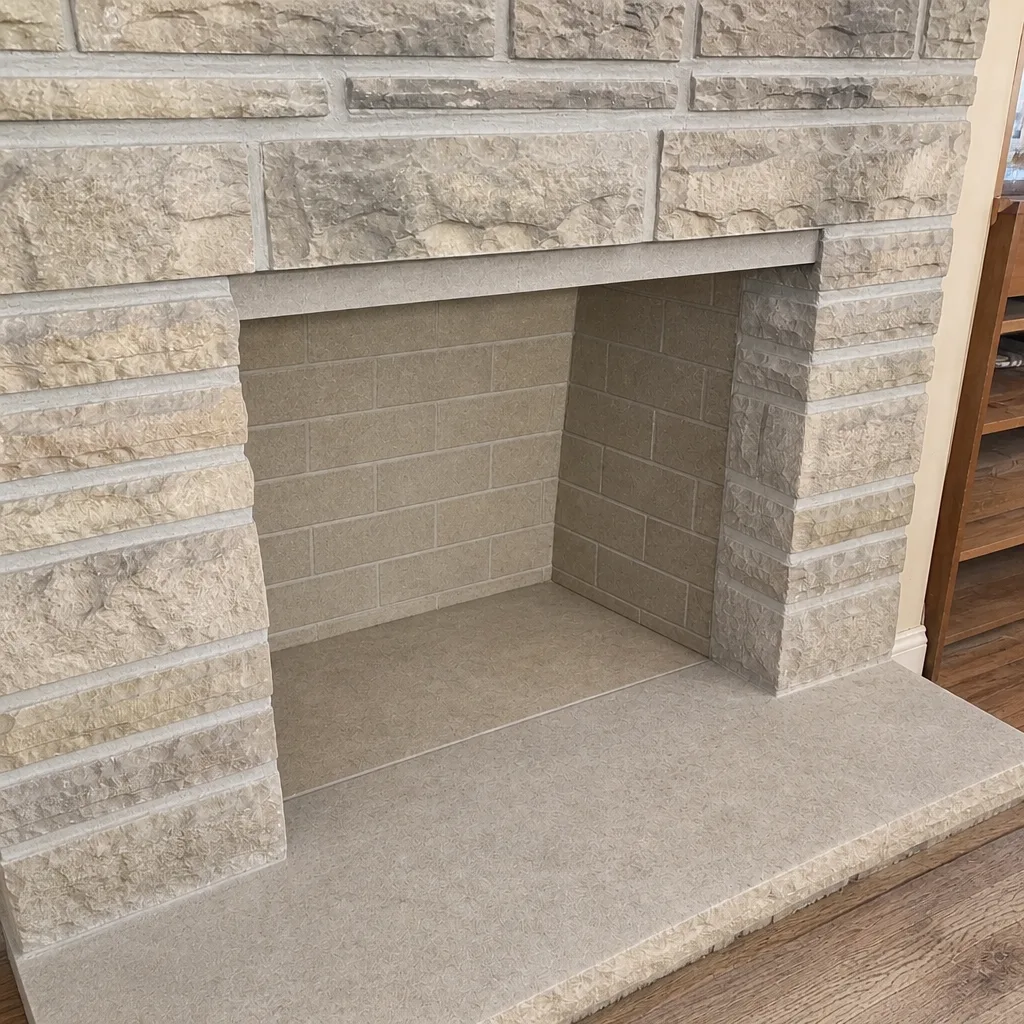
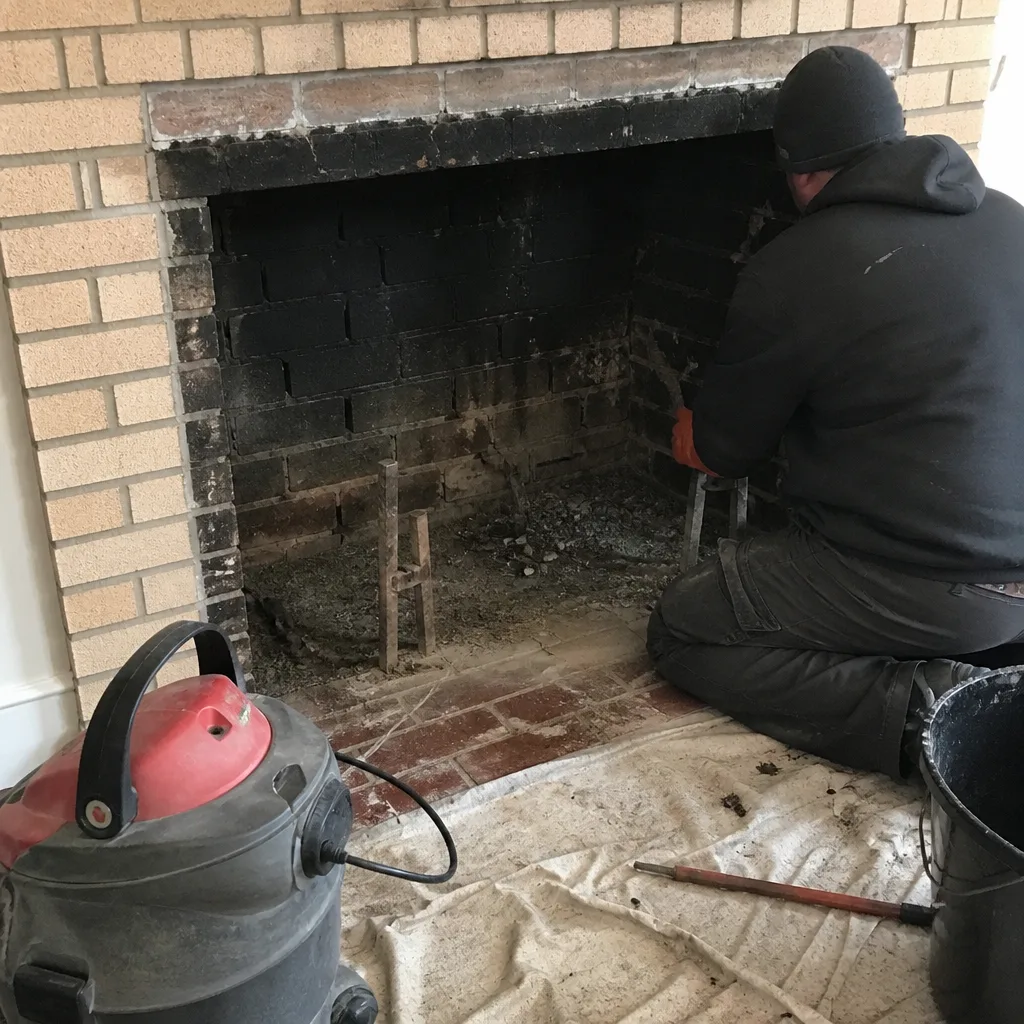
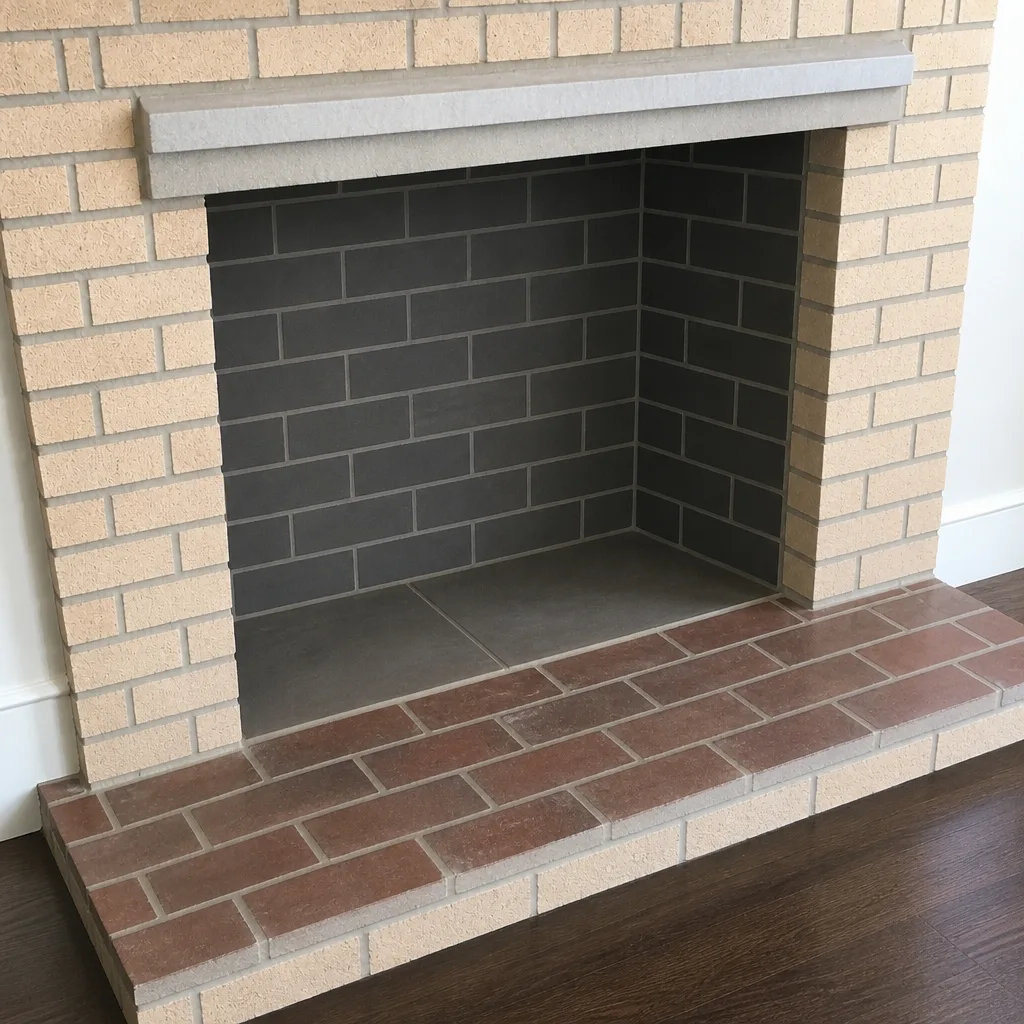
See the difference
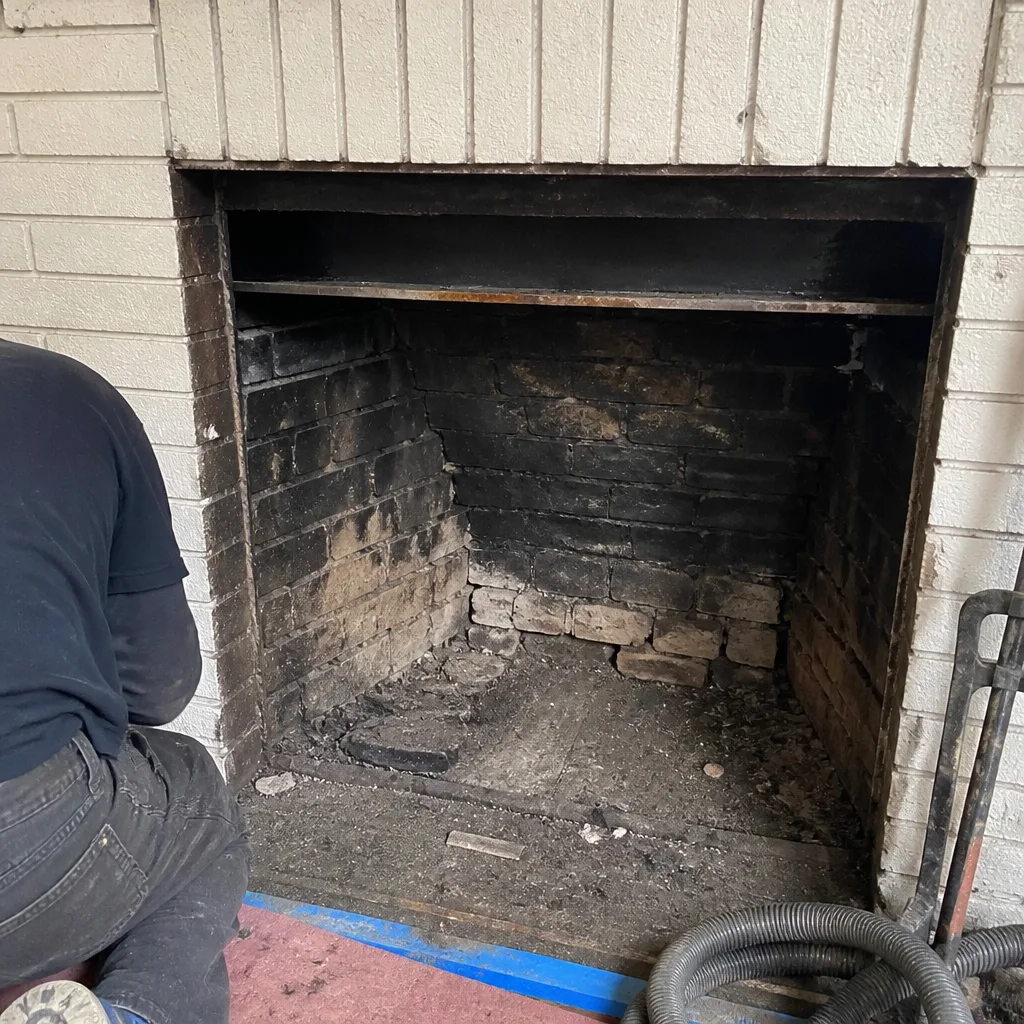 Before
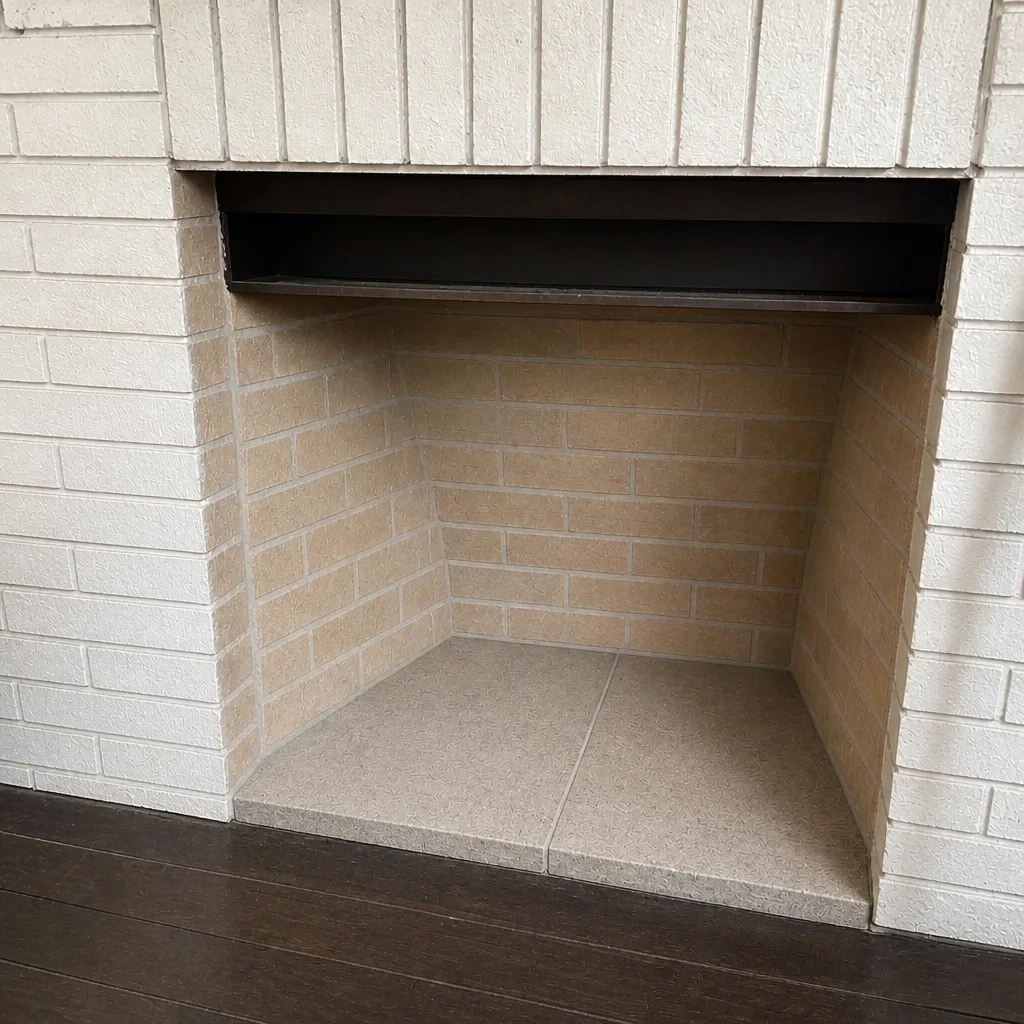 After
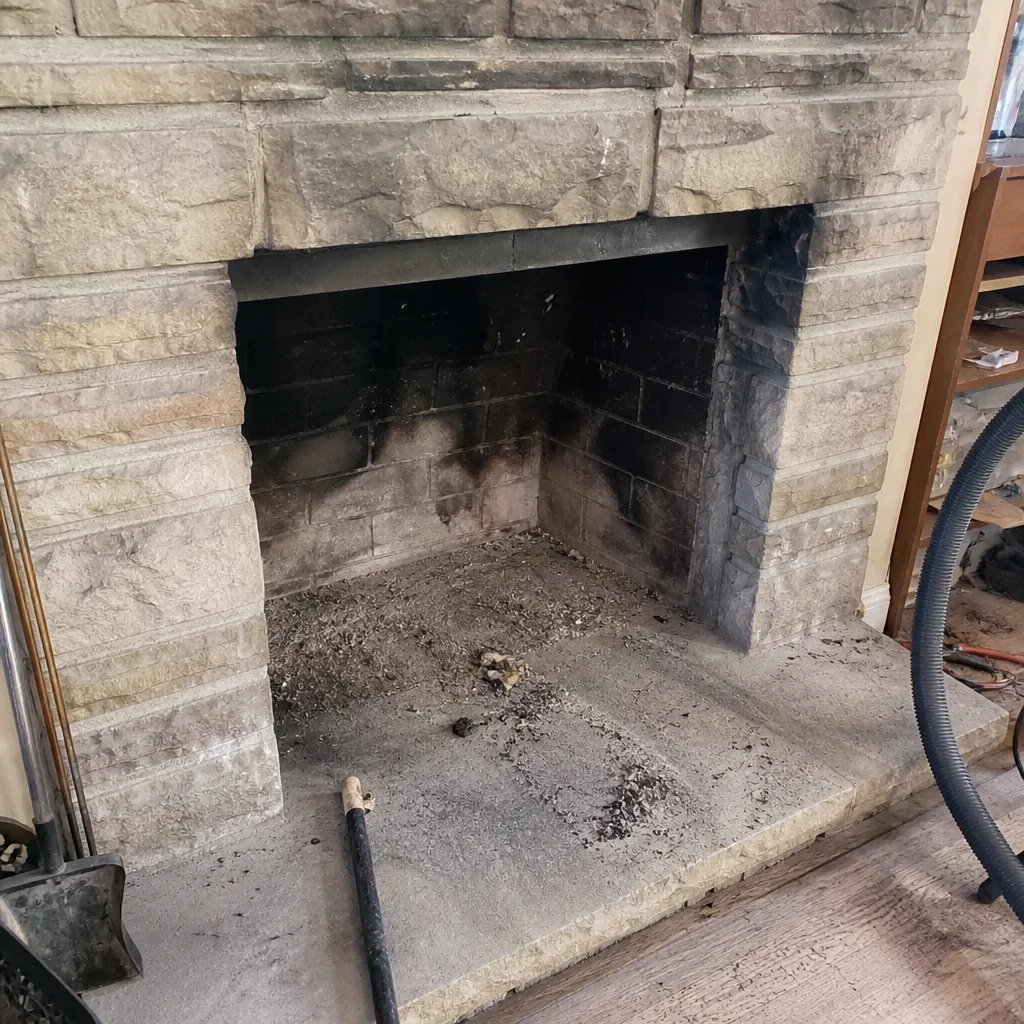 Before
 After
 Before
 After
When to Call a Professional
Call us when the firebox check turns up an obstruction, cracks, or dark streaks. Call when smoke enters the room during the burn. Call when a carbon monoxide alarm has sounded while a fire was burning. Call when the chimney smells smoky after rain and the smell doesn’t clear in dry weather. Call when you see spalling, efflorescence, or a leaning chimney. Call when you can’t remember the last time the chimney was seen at all, and call before each burning season starts.
Fort Wayne Chimney Sweep offers free estimates for Fort Wayne homeowners. Call (866) 589-6152. We answer 24/7. Fast dispatch from 7am to 7pm, Sunday through Friday. We inspect, clean, and repair under one roof. Same crew, same visit window.
Frequently Asked Questions
Because water is getting into the chimney and wetting the soot and creosote deposits, which gives off a smoky, sour smell. The leak is the problem, not the smoke. The likely entry points are failed flashing at the roofline, a cracked crown, a missing rain cap, or open mortar joints on the exterior. Get the water source identified before you pay for a sweep, because sweeping a wet flue leaves the actual problem in place. Call (866) 589-6152 for an exact estimate, and the estimate is free.
You need relining when the flue itself is compromised, and you need a sweep when the flue is intact but dirty. The signs of relining: smoke entering the room throughout the burn, visible cracks or gaps in the clay tile, dark streaks at the top of the firebox, or a musty smell with no fire burning. The signs of just needing a sweep: light smoke at start-up that clears once the flue warms, a cold flue, or creosote visible from the firebox. The only way to know for certain is a proper inspection. Call (866) 589-6152 for a free estimate.
It can often be restored if the structural integrity of the flue is intact. A HeatShield ceramic flue resurfacing can seal cracks and extend liner life without a full reline, provided the flue tile is still sound underneath. A flue that’s badly degraded, missing tile, or working with an insert that wasn’t sized for the chimney calls for a full reline with a liner system. Ask the diagnosing technician which method they’re proposing and why. A sweep who can’t do both will steer you toward the one they offer. Call (866) 589-6152 for a free estimate.
Once a year when the fireplace is in regular use, and once a year even when it isn’t, because Fort Wayne’s freeze-thaw cycle damages masonry whether you burn or not. An annual inspection catches small issues before they turn into a crown rebuild or a reline. This is the single highest-return piece of chimney maintenance there is. Call (866) 589-6152 for a free estimate.
A missed year is when quiet problems become expensive ones. Creosote builds up a stage, a crown crack opens a little wider, water gets into the joints, and the winter freeze-thaw cycle widens everything. What would have been a sweep becomes a repair. What would have been a repair becomes a reline. Skipping a season is the single biggest cost driver we see in Fort Wayne chimneys, and it’s entirely avoidable. Call (866) 589-6152 for a free estimate.
A smoky smell alone isn’t dangerous, but it’s a signal that moisture is in the flue, and moisture leads to spalling and masonry damage that eventually is. The bigger safety question is whether the same flue is letting carbon monoxide back into the room. Any time a carbon monoxide alarm sounds while a fire is burning, stop using the fireplace and call. A smoky smell after rain isn’t a reason to panic, but it is a reason to schedule an inspection before the next burning season. Call (866) 589-6152 for a free estimate.
The Bottom Line
Chimney troubleshooting in Fort Wayne comes down to reading the symptom correctly before you pay for a fix. Smell after rain means water intrusion. Smell after a fire means creosote. Draft problems can often be tuned. Relining problems can’t. The Fort Wayne climate, with clay soil that holds water and a freeze-thaw cycle that opens every crack, makes crown, flashing, and exterior joint checks part of a full diagnosis, not an add-on. Anything that puts smoke, fire, or carbon monoxide into the living space stops burning today. Everything else gets an inspection. Our technicians have up to experience, and we work across the six industry-recognized product lines that fit the actual problem.
Call Fort Wayne Chimney Sweep at (866) 589-6152 for a free estimate. We answer 24/7. Fast dispatch from 7am to 7pm, Sunday through Friday. We inspect, clean, and repair – same crew, same visit window.
Written by the team at Fort Wayne Chimney Sweep.